| |
|
|
Man, do not exalt yourself above the
animals, they are without sin, while you defile the
earth by your appearance on it ...
|
|
Fëdor Dostoevsky, The Brothers
Karamazov
|
Churches, both Protestant and Roman
Catholic, have historically denied that animals have any rights.
This view was buttressed by the Christian doctrine that animals
do not have souls, and the belief that God gave mankind absolute
power over animals:
And God said, Let us make man in our image, after our likeness:
and let them have dominion over the fish of the sea, and over
the fowl of the air, and over the cattle, and over all the
earth, and over every creeping thing that creepeth upon the
earth. Genesis 1:26
God was not interested in animals or the cruelties perpetrated
on them by humans. God himself had drowned innumerable innocent
animals when he flooded the world to punish humankind. Samson,
one of the Hebrew judges appointed by God, burned down his enemies"
crops, vineyards and olive groves by tying hundreds of foxes
together, tail-to-tail in pairs, setting light to them, and
letting them loose in the fields (Judges 15:3-5).
|
Noah's Ark - God killed almost all land
animals without qualm.
For Christians drowning animals could not be immoral because
animals had no souls.
If God could kill billions of animals without qualm, why
should Christians not do the same?
|
 |
"Doth God take care for oxen?" asked St Paul (1 Corinthians
9:9), inviting an answer in the negative (his point is that
divine laws about oxen are made for the benefit of man). God
might be aware of every sparrow, but in the Bible he cares little
for the welfare of them or any other animal. God frequently
instructed the Jews to kill not only his enemies but also their
animals. Jesus himself was responsible for the deaths of around
2,000 animals, when he caused a herd of someone else's pigs
to rush into a lake and drown (Mark 5:11-13). As a Cambridge
don noted in the eighteenth century, if Jesus had done that
in Cambridgeshire, the law of England would have required him
to swing for it.
|
Jesus commands devils to leave their
human host and decamp into the Gadarene Swine. (Mark,
5:9)
You can see the demons represented here riding their new
porcine hosts into the lake to drown.
German, Gospel Book of Otto III, c. 1000, Illumination,
Bayerische Staatsbibliothek, Munich.
|
|
|
Saint Augustine (354 – 430) argued that Jesus permitting
the Gadarene swine to drown demonstrated that mankind has no
duty of care toward animals: "Christ himself shows that
to refrain from the killing of animals and the destroying of
plants is the height of superstition ..."a.
Thomas Aquinas (c. 1225–1274) followed Augustine's position:
"If in Holy Scripture there are found some injunctions
forbidding the infliction of some cruelty toward brute animals
... this is either for removing a man's mind from exercising
cruelty towards other men ... or because the injury inflicted
on animals turns to a temporal loss for some man ..."b
The behaviour of Luis Caldera, a Franciscan missionary, was
entirely in keeping with Christian teachings. As he could not
speak local American languages he illustrated the doctrine of
Hell by putting animals into ovens and then lighting fires underneath
them. The cries and howls of the tortured animals terrified
the indigenous inhabitants — exactly as he intended. No
Christian found this practice at all unethical.
|
Medieval Christians believed a vast range
of nonsense about the natural world, and expressed no
concern about hunting animals to extinction. The beaver
for example became extinct in Britain because of hunting
- its testicles were used in Medieval Christian medicine.
The following text comes from the Aberdeen Bestiary: "There
is an animal called the beaver, which is extremely gentle;
its testicles are are highly suitable for medicine. Physiologus
says of it that, when it knows that a hunter is pursuing
it, it bites off its testicles and throws them in the
hunter’s face and, taking flight, escapes. But if,
once again, another hunter is in pursuit, the beaver rears
up and displays its sexual organs. When the hunter sees
that it lacks testicles, he leaves it alone."
The illustration below is castor dicitur a castrando
(the beaver’s self-castration),
Bestiary, Salisbury 13th century. British Library, Harley
4751, fol. 9v
|
|
|
The Church has always smiled upon barbarous practices perpetrated
upon animals. It has sometimes associated itself with them,
courting the popularity as a patron of this form of entertainment,
for example providing venues, providing religious explanations
for the proceedings, reserving certain forms of animal torture
for specific Christian feast days, blessing the proceedings,
and including depictions of animal torture in church art.
Bear Baiting
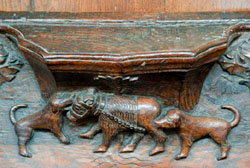  Bear
baiting was such a regular part of ordinary life when the population
was 100% Christian that it featured as decoration in Churches,
abbeys and cathedrals, even on religious shrines. A bear was
chained to a stake so that its range was restricted, and dogs
were set on it. Depending on the size and fighting prowess of
the bear more and more dogs could be released to match the bear's
fighting power. The bloody spectacle provided fun for all, men,
women, children and priests. Animal cruelty was one of the few
public enjoyments that the Church did not seek to ban. Bear
baiting was such a regular part of ordinary life when the population
was 100% Christian that it featured as decoration in Churches,
abbeys and cathedrals, even on religious shrines. A bear was
chained to a stake so that its range was restricted, and dogs
were set on it. Depending on the size and fighting prowess of
the bear more and more dogs could be released to match the bear's
fighting power. The bloody spectacle provided fun for all, men,
women, children and priests. Animal cruelty was one of the few
public enjoyments that the Church did not seek to ban.
|
Bear baiting depicted on a 14th century
Christian shrine
Carving on the gallery over the shrine of St. Alban, St.
Albans Cathedral, St. Albans, England
|
|
|
|
Bear Baiting depicted in a religious
Christian work, The Louterell Psalter, c1300
British Library, Additional MS 42130, Folio 161r Bear-baiting.
Dogs are urged to attack the chained and muzzled bear
|
|
|
 In
London the favourite location for public torture of animals
was to the South of the City in an area controlled by the Bishop
of Winchester. It was here that the Right Reverend Lord Bishop
sustained his fortune, licensing his Winchester Geese (prostitutes)
and various theatres: specialist theatres for acting, specialist
theatres for torturing bulls and specialist theatres for torturing
bears. In
London the favourite location for public torture of animals
was to the South of the City in an area controlled by the Bishop
of Winchester. It was here that the Right Reverend Lord Bishop
sustained his fortune, licensing his Winchester Geese (prostitutes)
and various theatres: specialist theatres for acting, specialist
theatres for torturing bulls and specialist theatres for torturing
bears.
|
Bears were also tortured at fairs in
the open air. The bear is chained to a stake,
to keep the spectacle in a fixed place and keep the Christian
spectators safe.
|
|
|
|
Images of a medieval and a later bear
baiting theatre in Southwark, south of the river Thames
|
|


|
 In
this Elizabethan illustration on the right, three theatres are
shown together: from left to right the bear baiting theatre
(also shown above right), the Rose Theatre and the Globe Theatre. In
this Elizabethan illustration on the right, three theatres are
shown together: from left to right the bear baiting theatre
(also shown above right), the Rose Theatre and the Globe Theatre.

|
Henry Thomas Alken, Bear Baiting,
published by Thomas McLean, 1820
|
|
|
|
Detail from Bear Baiting, by Samuel
Henry Gordon Alken
Bear baiting continued without any form of check during
the whole Christian period,
up until Enlightenment ideas become dominant in the nineteenth
century.
|
|
|
|
Bear baiting sometimes took place in
"pits" fenced off from the public - hence the
phrase "bear-pit" by analogy the term is also
used for any unusually aggressive political arena in which
direct, heated attacks are common.
|
|
|
Bull baiting also took place throughout Europe, both in the
open air and in dedicated theatres, more commonly known as bull
rings. The locations of these bull rings is often preserved
in place names, such as the Bull Ring in Birmingham and Bull
Ring Road in Leeds,
|
Adjacent Bull-baiting and Bear-Baiting
Rings, Bankside, London c.1560
|
|
|
Bull Baiting
Bull Baiting was popular through the Middle Ages and up to
secular times. It was patronised by all classes of people, including
priests, from the rich to the poor. Almost every town and village
in England had its bull ring. Bulls, horses, and other animals
were trained for baiting. It was a highlight of market days,
wakes, fairs, and church festivals. The animal would be tied
with collar and rope, and tormented by ferocious bulldogs. At
other times, the dogs were used by hunters to catch game and
by butchers, and by farmers to bring down wayward cattle. It
was believed then that sending a dog out after a bull would
tenderise the meat.
A 1822 a law passed to prevent the cruel treatment of cattle
was the first legislation for animal welfare in the world. In
1835, the Protection of Animals Act made bull, bear and
badger baiting, as well as cock fighting and dog fighting illegal.
The legislation covered cruelty to domestic and captive animals,
not too wild ones. In 1876 a Cruelty to Animals Act was
passed - but there was still no progress for wild animals. At
each stage, Christians objected to the legislation on the grounds
that man owed no obligation to animals. The traditional position
was cited by clergymen - that animals had no souls and so could
not feel pain.
|
Bull Baiting
Bulls were also chained while being baited, to stop them
running away and to localise the spectacle.
|
|
|
Badger Baiting
 Badgers
were also baited. A baiting session typically resulted in the
death of the badger, and often serious injuries to the dogs.
Badgers have powerful claws, used for digging in hard earth,
and capable of injuring a dog. "Drawing the badger"
was a way to test a badger-baiting dog. The badger was enclosed
and the dog introduced into a tunnel leading to the enclosure.
Usually the dog was seized immediately by the badger and the
dog in turn gripped the badger. Each bit, tore and pulled the
other. The two were separated and the badger returned to its
den. The dog was sent back in to seize the badger and it was
again drawn out with the badger. This drawing was repeated over
and over. The more often a dog was able to seize the badger
within a minute, so that both could be pulled out together,
the more it was considered up to the task and considered game. Badgers
were also baited. A baiting session typically resulted in the
death of the badger, and often serious injuries to the dogs.
Badgers have powerful claws, used for digging in hard earth,
and capable of injuring a dog. "Drawing the badger"
was a way to test a badger-baiting dog. The badger was enclosed
and the dog introduced into a tunnel leading to the enclosure.
Usually the dog was seized immediately by the badger and the
dog in turn gripped the badger. Each bit, tore and pulled the
other. The two were separated and the badger returned to its
den. The dog was sent back in to seize the badger and it was
again drawn out with the badger. This drawing was repeated over
and over. The more often a dog was able to seize the badger
within a minute, so that both could be pulled out together,
the more it was considered up to the task and considered game.
|
For traditional Christians animals could
be tortured for pleasure.
They had no immortal souls and had been made for humankind
to use as they wished.
Animal torture of all kinds was popular throughout the
full period of Christian domination of morality.
Fool and dog, Royal 19 D VI f. 267v, (1418-1420), British
Library, London
|
|
|
Rat Baiting
Rat Baiting was another activity regarded as acceptable for
Christians, except by Puritans who opposed it on the grounds
that all entertainment was wrong.
|
Rat Baiting.
|
 |
Dog Fighting
Dogs could be tortured themselves, and also used to torture
each other, and other animals.
|
Henry Thomas Alken, Badger Baiting, London,
c. 1824, coloured print + black & white detail
|
 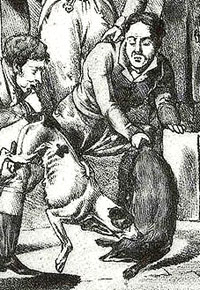 |
 Drawing
the badger came to England in the 18th century and soon became
a very popular side-show in the pit. It provided a new opportunity
to win or lose money by betting. Drawing the badger thus became
a permanent part of the fight in the pit. Some dog breeds were
specifically developed for badger-baiting, notably the Dachshund. Drawing
the badger came to England in the 18th century and soon became
a very popular side-show in the pit. It provided a new opportunity
to win or lose money by betting. Drawing the badger thus became
a permanent part of the fight in the pit. Some dog breeds were
specifically developed for badger-baiting, notably the Dachshund.
Apart from the cruelty towards badgers, dogs are also brutalised.
Dogs usually suffered injuries of the face and neck. In some
cases, the injuries were such that the dogs had to be put down.
Badger baiting was outlawed in the United Kingdom in 1835, just
after the Great Reform Act had shifted power away from the traditional
Christian centres of power. As Badger-baiting declined it was
replaced by dog fighting.
|
Dog fights, like other forms of animal
torture, drew large crowds
|
|
|
|
Dog Fighting in the nineteenth century
on the Tottenham Court Road, London
|
|
|
Cock Fighting
 Up
until the latter part of the twentieth century the teaching
of all Christian Churches has been that animals exist for the
benefit of humankind, and humankind is at liberty to treat them
as it likes. A range of animal cruelty has been accepted during
the Christian period. Cock fighting for example always been
a popular Christian pastime Up
until the latter part of the twentieth century the teaching
of all Christian Churches has been that animals exist for the
benefit of humankind, and humankind is at liberty to treat them
as it likes. A range of animal cruelty has been accepted during
the Christian period. Cock fighting for example always been
a popular Christian pastime
The illustration on the right shows a cockfight on the sarcophagus
of St Agnese. "Two cocks fighting: striving for Christ
and the palm of glory."1
 Saint
Augustine of Hippo appreciated cockfighting, and imagined that
God guided the birds in attacking each other:: "in every
motion of these animals unendowed with reason there was nothing
ungraceful since, of course another, higher, reason was guiding
everything they did". Saint
Augustine of Hippo appreciated cockfighting, and imagined that
God guided the birds in attacking each other:: "in every
motion of these animals unendowed with reason there was nothing
ungraceful since, of course another, higher, reason was guiding
everything they did".
|
Medieval children enjoying the
sport of cock fighting.
From the Romance of Alexander, MS. Bodl. 264, pt.
I .folio 050r
|
|
|
|
| |
|
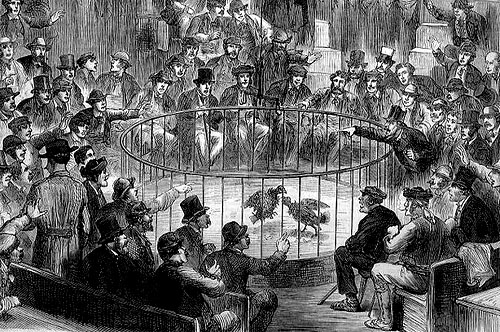
Sunday Cockfight in Madrid.
|
 |
| |
|
Royal Cock Pit, Microcosm
of London, Plate 018,
|
|
|
 Cock
fighting remained a Christian favourite sport for even longer
than other forms of animal cruelty. Throughout western Europe
cocks were bred for fighting each other. The birds, referred
to as gamecocks, are specially bred birds, selected for stamina
and strength. The comb and wattle are cut off in order to remove
anatomical vulnerabilities (similar to the traditional practice
of docking a dog's tail and ears). Cocks possess congenital
aggression toward all males of the same species. As a blood
sport Cockfighting is regulated in many countries, but still
defended as an "age old sport"[ with cultural and
religious relevance. Cock fighting was made illegal in Louisiana
as late as 2008. Cock
fighting remained a Christian favourite sport for even longer
than other forms of animal cruelty. Throughout western Europe
cocks were bred for fighting each other. The birds, referred
to as gamecocks, are specially bred birds, selected for stamina
and strength. The comb and wattle are cut off in order to remove
anatomical vulnerabilities (similar to the traditional practice
of docking a dog's tail and ears). Cocks possess congenital
aggression toward all males of the same species. As a blood
sport Cockfighting is regulated in many countries, but still
defended as an "age old sport"[ with cultural and
religious relevance. Cock fighting was made illegal in Louisiana
as late as 2008.
| |
|
 Special
spurs made of metal and designed to act like knives are
bound to the feet of gamebirds to supplement their own
natural (smaller and less damaging) spurs and cause major
physical damage to the other cock. Special
spurs made of metal and designed to act like knives are
bound to the feet of gamebirds to supplement their own
natural (smaller and less damaging) spurs and cause major
physical damage to the other cock.

|
Cock Throwing
Cock throwing, also known as cock-shying or throwing at cocks,
was a blood sport widely practised in England until the 19th
century. A cockerel was held or tied to a post, and people took
turns throwing coksteles (special weighted sticks) at the bird
until it died. Cock throwing was traditionally associated with
the Christian activities of Shrove Tuesday. It was a popular
pastime with people of all classes, especially with children.
Sir Thomas More, now a Roman Catholic saint, referred to his
skill in casting a cokstele as a boy. Cock throwing's popularity
waned in England during the secular Enlightenment, as social
values changed and animal welfare became a concern.
|
William Hogarth depicted cock throwing
as a barbarous activity, the first stage in a "slippery
slope"
in The Four Stages of Cruelty, Children Torturing
Animals (detail) 1751.
|
|
|
Cock throwing was commonly practiced at public and grammar
schools, including Church schools, as elsewhere, on Shrove Tuesday.
If the bird had its legs broken or was lamed during the event,
it was sometimes supported with sticks in order to prolong the
"sport". The cock was also sometimes placed inside
an earthenware jar to prevent it from moving. Variations on
the theme included goose quailing (or squailing), when a goose
was substituted, and cock thrashing or cock whipping, which
involved a cock being placed in a pit where the blindfolded
participants would attempt to hit it with their sticks.
|
Wellington represented as the cock in
this cartoon depicting cock throwing from around the 1820s
|
|
|
By the early 19th century, as Christianity started to lose
influence, the tradition declined rapidly, lingering into the
1840s.
In some places, especially Christian schools, bows and arrows
were used instead of coksteles. James Clegg, writing in his
diary about Shrove Tuesday at Rochdale Grammar School in 1686,
says “…ye young men of ye upper end of the school
were shooting with bows and arrows at a cock, and the rest of
us made a lane for the arrows to pass-through.” The practice
was first mentioned in How the Good Wive taught hir Doughter
(1430). Shooting at cockerels was abolished at Manchester Grammar
School in 1867.
Fox, Cat, Dog .... Tossing
Fox tossing was a popular competitive blood sport in parts
of Europe in the 17th and 18th centuries, which involved throwing
live foxes (or cats, dogs and or other animals) high into the
air. It was practiced by members of the aristocracy in an enclosed
piece of ground often a courtyard, using slings with a person
on each end to catapult the animal upwards. The outcome for
the tossed animals was invariably fatal, one way or another.
They would be clubbed to death if they did not die of their
fall injuries.
|
A fox-tossing tournament of the early
18th century, depicted in Der vollkommene deutsche Jäger
(1719). You can see some foxes i the air, some injured
on the ground.
|
 |
Fox tossing would take place within a circle of canvas screens
in the open or by using the courtyard of a castle or palace.
Pairs of people would stand six to seven and a half metres (20
to 25 feet) apart, holding the ends of a sling laid flat on
the ground. An animal such as a fox would then be released from
a cage and driven with a whip through the arena, across the
slings. As it crossed a sling the participants pulled hard on
the ends, throwing the animal high into the air. Those who slung
a fox the highest, or slung the most foxes would win.
|
German aristocrats engaged in fox tossing
or Fuchsprellen (lit. "fox bouncing").
Part of the fun was that a fox might
land on the throwers,
as has happened here in the bottom left of the illustration.
|
 |
Augustus II the Strong, the Christian King of Poland and Elector
of Saxony, held a tossing contest in Dresden at which 647 foxes,
533 hares, 34 badgers and 21 wildcats were tossed and killed.
Other rulers also participated in the sport. The Swedish envoy
Esaias Pufendorf, witnessing a fox-tossing contest held in Vienna
in March 1672, noted in his diary seeing the Holy Roman Emperor
Leopold I joining the court dwarfs and boys in clubbing to death
the injured animals. The sport was especially popular as an
activity for mixed couples, with the rivalry between the couples
adding to the entertainment. On occasion, tossing formed part
of a costumed masquerade in which the tossed animal as well
as the participants would be decorated and masked.
The partipants were all Christian. No Christian is recorded
as having considered this mass animal torture and killing at
all immoral, except of course for Puritans, on the grounds that
Christians should not be enjoying themselves.
Goose Pulling
Goose pulling (also called gander pulling, goose riding or
pulling the goose) was a blood sport practiced in parts of the
Netherlands, Belgium, England and North America up to the the
19th century. The sport involved fastening a live goose with
a well-greased head to a rope or pole that was stretched across
a road. A man riding on horseback at a full gallop would attempt
to grab the bird by the neck in order to pull the head off.
Sometimes a live hare was used instead of a goose. Like many
other forms of cruelty it was especially associated with the
Church festival of Shrove Tuesday. It is still practised today
using an already dead goose in Belgium, the Netherlands and
Germany as part of traditional Shrove Monday celebrations. Philip
Parsons, writing in 1771, described how it was carried out in
England using a cock instead of a goose:
In the Northern parts of England it is no unusual diversion
to tie a rope across a street and let it swing about the distance
of ten yards from the ground. To the middle of this a living
cock is tied by the legs. As he swings in the air, a set of
young people ride one after another, full speed, under the
rope, and rising in the stirrups, catch at the animal's head,
which is close clipped and well soaped, in order to elude
the grasp. Now he who is able to keep his seat in his saddle,
and his hold of the bird's head, so as to carry it off in
his hand, bears away the palm, and becomes the noble hero
of the day.
The sport was challenging: the bird's flailing made it difficult
to target and the oiling of the goose's neck made it difficult
to retain a grip on the bird. Many riders missed altogether;
others broke the goose's neck without snapping off the head.
Cat Burning
In the medieval and early modern periods cats were associated
with witchcraft. They were often killed during Christian celebrations,
either by being thrown off church towers or by being burned
alive, often by the dozen, as agents of the Devil. Practice
in Ypres (modern Belgium) was typical, but the town is unusual
in having retaned a sanitised version of cat torture called
kattenstoen. As the town's website explains:
The earliest descriptions of cat throwing can be found in
the city chronicles of the years 1410-1420. The Ypres chronicles
often link the cat throwing with the Ascension fair that already
existed in 1127. After the fair was moved to the second week
of the Lent in 1476, the cats were thrown on 'Cats' Wednesday'.
One chronicle states that the animals were first thrown off
the St Martin's church and since 1231 from the Belfry tower.
According to another chronicle the latter tower was not finished
until 1304. From texts in the diary of Augustus van Hernighem,
a chronicle writer, it can be deducted that the number of
thrown cats had a symbolic value. More cats were killed in
years the city was not that prosperous than in good years.
In 1594 for example, a year when things looked up, only three
cats were thrown. It is not clear why. Jean Jacques Lambin,
an Ypres archivist who died in 1841 witnessed the cats throwing
several times. He was there when living cats were thrown off
the tower for the last time in 1817. According to Lambin the
very last living cat survived the fall. The little animal
scampered as fast as it could, not ready to be caught once
more for the same purpose. From 1817 until the First World
War all that remained of the Cat festival in Ypres was the
playing of the carillons on Cats' Wednesday.
https://www.kattenstoet.be/en/page/497-511/the-cat-throwing.html,
retrieved 17 Arril 2016
Today the festival of kattenstoet has been revived, but with
toy cats thrown from the Church. Cat burning was also practised:
Although Ypres is not the only place where cats were used
as victims in numerous folkloristic games, it is one of the
few cities where the ritual still happens - albeit with stuffed
toys instead of real cats. In medieval times cats were tortured
and killed during the 'Cat fair' in many West European places.
When the Prince of Orange and the Duke of Anjou visited Bruges
in July 1582 they were 'very fittingly welcomed with a beautiful
device' according to an old text.' This 'beautiful device'
consisted of a ship with a high mast that was placed in the
centre of the Market Square. Fireworks were placed on the
ship at different places and when they were lit a mix of crackling
powder and cats meowing resounded. When the ship finally was
set alight, the animals perished in the flames. .... many
people think that the cats' torture was a consequence of the
association of cats with dark powers. The custom was rooted
in superstition however. The exorcism of evil spirits would
be the reason why the animals were used to force the devil
to grant some favour. At the time people thought the devil
could not see a cat suffer and would therefore show leniency.....
The reason for this association with evil must be searched
in the church. Cats were linked to witchcraft and paganism.
This occurred because the Christian Church considered all
those who thought differently as heathens and prosecuted them.
Also because those people were often associated with cats
by the church.
https://www.kattenstoet.be/en/page/497-510/cat-torturing-in-the-middle-ages.html,
retrieved 17 Arril 2016
Cat burning was a widespread Christian entertainment elsewhere
in France prior to the 1800s. People would gather dozens of
cats in a bundle and hoist them high into the air onto a bonfire.
In the midsummer fires formerly kindled on the Place de
Grève at Paris it was the custom to burn a basket,
barrel, or sack full of live cats, which was hung from a tall
mast in the midst of the bonfire; sometimes a fox was burned.
The people collected the embers and ashes of the fire and
took them home, believing that they brought good luck. The
French kings often witnessed these spectacles and even lit
the bonfire with their own hands. In 1648 Louis the Fourteenth,
crowned with a wreath of roses and carrying a bunch of roses
in his hand, kindled the fire, danced at it and partook of
the banquet afterwards in the town hall. But this was the
last occasion when a monarch presided at the midsummer bonfire
in Paris. At Metz midsummer fires were lighted with great
pomp on the esplanade, and a dozen cats, enclosed in wicker
cages, were burned alive in them, to the amusement of the
people. Similarly at Gap, in the department of the High Alps,
cats used to be roasted over the midsummer bonfire.... In
the Vosges cats were burned on Shrove Tuesday; in Alsace they
were thrown into the Easter bonfire. In the department of
the Ardennes cats were flung into the bonfires kindled on
the first Sunday in Lent; sometimes, by a refinement of cruelty,
they were hung over the fire from the end of a pole and roasted
alive. “The cat, which represented the devil, could never
suffer enough.”
Sir James Frazer,. The Golden Bough, (1922)
Cat-burning was described in The Great Cat Massacre,
a scholarly work by historian Robert Darnton:
Cats also figured in the cycle of Saint John the Baptist,
which took place on June 24, at the time of summer solstice.
Crowds made bonfires, jumped over them, danced around them,
and threw into them objects with magical power, hoping to
avoid disaster and obtain good fortune during the rest of
the year. A favorite object was cats — cats tied up in
bags, cats suspended from ropes, or cats burned at stake.
Parisians liked to incinerate cats by the sackful, while the
Courimauds (or "cour à miaud" or cat chasers)
of Saint Chamond preferred to chase a flaming cat through
the streets. In parts of Burgundy and Lorraine they danced
around a kind of burning May pole with a cat tied to it. In
the Metz region they burned a dozen cats at a time in a basket
on top of a bonfire. The ceremony took place with great pomp
in Metz itself, until it was abolished in 1765. ... Although
the practice varied from place to place, the ingredients were
everywhere the same: a "feu de joie" (bonfire),
cats, and an aura of hilarious witch-hunting. Wherever the
scent of burning felines could be found, a smile was sure
to follow.
Robert Darnton, The Great Cat Massacre:
And Other Episodes in French Cultural History, Basic Books,
2009. pp. 83–84
Jean Meslier, the French Catholic priest who was also an atheist,
expressed a characteristicly secular view of cat burning.
Among other things, these mischievous, brutal madmen make
[the cats] cruelly suffer harsh and violent tortures in their
entertainments and even in public celebrations; they tie up
nipping cats to the end of some pole they set up and at the
bottom of which they light the fires of joy where they burn
them alive to have the pleasure of seeing the violent movements
and hearing the frightening cries that these poor unfortunate
beasts are forced to make because of the harshness and violence
of the tortures. (Jean Meslier, Testament:
Memoir of the thoughts and sentiments of Jean Meslier
(English translation), Amherst, N.Y.: Prometheus Books (2009).
pp. 562–563.
Meslier noted explicitly the Cartesian Christian position that
animals possessed no soul, and thus no sentience, nor capacity
for suffering. He observed that this "tends to stifle in
the heart of man all feelings of gentleness, kindness, and compassion
that they may have for beasts ..."
The justification for the persecution of black cats in particular
was a papal bull called Vox in Rama.
Vox in Rama
Vox in Rama is a papal bull issued by Pope Gregory IX
condemning a supposed heresy known as Luciferianism, a form
of devil worship. The Bull was issued in response to allegations
made by Konrad von Marburg, who had taken an active part in
the Albigensian Crusade. The bull urged Siegfried III (Archbishop
of Mainz) and King Henry VII (son of Emperor Frederick II),
the heads of the local ecclesiastical and temporal authorities,
to seek out and destroy the heretics in their lands. It was
issued to King Henry, in June 1233 and subsequently to Siegfried,
demanding that they use all efforts to stop the practice.
The bull describes in detail the initiation rites of a supposed
sect, claiming that the new initiate is first approached by
a mysterious toad as large as a dog. Then an emaciated pale
man would appear, whom the initiate would kiss and in consequence
forget all memory of the Catholic faith. Members of the sect
would then meet for a meal. When the meal had ended, a statue
of a black cat would come to life, walking backwards with its
tail erect. The cat was supposedly referred to as "Master".
First the new initiate and then the leader of the sect would
kiss the cat on its backside. After this ritual was completed,
candles would be extinguished and the sect would engage in orgies,
incest and homosexuality. When the candles were re-lit, a man
from a dark corner "comes forth, from the loins upward
shining like the sun. His lower part is shaggy like a cat."
After a brief formulaic dialogue between the shining man-cat
and the cult members, the meeting ends.
In his bull, Gregory condemns the practice and calls upon the
religious and secular authorities to take action against the
cult's participants. Konrad was appointed Inquisitor in Mainz
the same year the bull was issued, 1233. Konrad duly uncovered
the sect and confirmed that they were visited by the Devil and
by a diabolical black cat - confirming his own unlikely accusations.
Confessions were obtained through the use of threats and torture,
which would come to characterise Inquisition practice. A papal
official wrote to Gregory confirming that Konrad had been forcing
innocent people to confess by threatening them with burning
at the stake.
This identification of black cats with satanic rituals was
reflected in accusations against the Cathars in the thirteenth
century, the Knights Templars in the fourteenth, and supposed
witches from the fifteenth - in each case providing reason the
burn the accused as servants of the Devil. Black cats were also
burned for their supposed role in satanic activities. These
accusations certainly resulted in countless thousands of both
people and cats being persecuted and killed, and it has even
been suggested that the spread of the Black Death might have
been facilitated by the shortage of cats. According to the theory
the flea population exploded along with the rat population,
as cats were exterminated en masse.
Konrad was eventually assassinated, having overreached himself
in his accusations. His name has become a byword for sadism
and other excesses of Catholicism, especially in Maintz. The
absurdities of Pope Gregory's bull has also become an embarrassment
for the Catholic Church, and a few apologists have tried to
claim that it is a fabrication, though it is universally accepted
by historians (and entirely in line with other contemporary
stories, such as Saint Dominic's heroic defeat of a demonic
cat in the Church at Fanjeaux).
The writer Donald W. Engles claims that Vox in Rama
was "a death warrant for the [cat], which would be continued
to be slaughtered without mercy until the early 19th century."c.
The supposed association between black cats and demonic activities
also provided for all of the medieval persecution of cats already
reviewed above. It has also been claimed that relatively few
all-black cats survive in western Europe as a result of the
persecution. Angeles might have been understating his case,
as the superstitious killing of black cats has continued in
Catholic Italy into the twenty-first century.d.
Church supported and Church sponsored
Cruelty
Dogs were bred not only for baiting and for fighting each other.
They were also exploited as draught animals into the second
half of the nineteenth century:
Many forms of animal torture and cruelty were so much part
of ordinary everyday life of the people that it was almost
impossible to get anyone to admit that they were not justifiable.
Thus the use of dogs as draught animals, which for generations
was a scandal and a disgrace to Christian England. The animals
were worked to death without the slightest compunction. They
were compelled to pull full loads far beyond their strength;
they were flogged till they dropped dead or dying by the roadside2.
Conditions in Roman Catholic southern Europe were worse, and
remained so for much longer. The enjoyment of blood, gore and
suffering fitted with the sensual obsessions with broken flesh,
blood and suffering that are such a prominent feature of Christianity
in the Roman Church. The Puritans tried to stamp out such practices;
but not for any genuinely moral reason. As Macaulay put it "The
Puritan hated bear baiting, not because it gave pain to the
bear, but because it gave pleasure to the spectators".
 In
the Middle Ages, when the Church was at its most powerful, more
imaginative sports had been widespread. It was, for example,
considered fun to tie a cat in a bag or leather bottle, hang
it on a tree, and for archers to use it for target practice.
Cats seem to have had a poor time of it, for when it became
unfashionable to go around killing Jews at Shrovetide, European
Christians took to killing cats instead. The Germans called
it Judasstürtzen. In England it was customary
to stone cockerels to death on Shrove Tuesday. Another seasonal
favourite was for small boys to go out on St Stephen's Day and
stone to death as many wrens as they could find. They did this
to remember the stoning of St Stephen (and also to forget the
wren's importance in pre-Christian Celtic religions). This practice
continued in Roman Catholic Ireland until well within living
memory. In
the Middle Ages, when the Church was at its most powerful, more
imaginative sports had been widespread. It was, for example,
considered fun to tie a cat in a bag or leather bottle, hang
it on a tree, and for archers to use it for target practice.
Cats seem to have had a poor time of it, for when it became
unfashionable to go around killing Jews at Shrovetide, European
Christians took to killing cats instead. The Germans called
it Judasstürtzen. In England it was customary
to stone cockerels to death on Shrove Tuesday. Another seasonal
favourite was for small boys to go out on St Stephen's Day and
stone to death as many wrens as they could find. They did this
to remember the stoning of St Stephen (and also to forget the
wren's importance in pre-Christian Celtic religions). This practice
continued in Roman Catholic Ireland until well within living
memory.
The Church deduced that because animals did not possess souls,
they were akin to automatons. Like machines, they could feel
neither emotion nor pain. They were disposable toys provided
for mankind's amusement. Activities in which animals were tortured
for sport were recorded without any hint that there might be
anything wrong with them. Christopher Columbus and his crew,
on their transatlantic mission from God, were typical. They
delighted in wounding and partially dismembering a newly discovered
animal, then seeing if it would still fight3.
As animals were mere toys, one can imagine the glee of the Christian
sailors who discovered that on Mauritius God had provided them
with birds so trusting that they would walk up to their Christian
visitors to be killed. Their meat was found to be unpalatable
so the birds were clubbed to death by Christians just for fun.
Within two hundred years dodos were extinct.
|
Benjamin, the last known Tasmanian Tiger,
at Beaumaris Zoo in 1933
(renamed The Hobart Zoo, on the Queens Domain in Hobart,
Tasmania, Australia)
One of thousands of species hunted to extinction during
the Christian hegemony
|
 |
No Christian saw anything wrong in exterminating hundreds of
species around the world. Neither was there any objection to
the brutality. In the middle of the nineteenth century Pope
Pius IX forbade the opening of an animal protection office in
Rome on the grounds that human beings had no duties to animals.
This sort of attitude has persisted to the present day. Only
a few years ago an Italian archbishop stated that it was not
a sin to beat a dog or leave it to starve to death4.
How could it be if dogs did not have souls?
Hunting guns and other instruments of death are routinely blessed
by clergymen, and not only Roman Catholic ones. In Norway Lutheran
ministers continue to bless whaling ships. When secular thinkers
had started to think seriously about the moral question of human
rights over animals and human obligations to animals, Christians
were still taking for granted that it was absurd to think of
such things. When T. H. Huxley lectured in Edinburgh on the
relationship between humankind and the lower animals, the Presbyterian
Witness not only attacked it as a blasphemous contradiction
to biblical narrative and doctrine but also added the suggestion
that attendees should have formed a Gorilla Emancipation Society,
clearly intending this as a insult.
Animal Trials
As animals did not possess souls, it was no crime to torture,
mutilate or kill them. Sometime is it was not only acceptable,
but admirable, even saintly, to do so. In the year 666 Saint.
Agricola in supposedly cursed and burned storks en masse
at Avignon. Although they did not possess souls, or feelings,
animals were nonetheless responsible for their actions, and
were subject to the will of the Church. The justification cited
was Exodus 21:28: "If a bull gores a man or woman to death,
the bull is to be stoned to death." The text was interpreted
as referring to any animal, and the specific mode of execution
generally ignored. In practice animals were executed in various
ways: hanged, burned alive, strangled or buried alive. Additional
biblical support for prosecuting animals was found in Genesis
9:5 where animals are accountable for the shedding of human
blood, in the cursing of the serpent in the Garden of Eden,
and in David's cursing of rocks and mountains (2 Samuel 1:21
).
No moral intention was required on the part of the animal.
Oxen which gored humans were not executed because they were
morally culpable but because they were "lower" animals
who had killed God's creatures higher up on the scale of creation.
For Christians, they turned the natural order upside down.
|
Images of animals inverting the natural
orderfeature heavily in Medieval Church manuscripts, for
example animals torturing and killing humans (the God-given
natural order being for humans to torture and kill animals).
Here rabbits are beating and flaying a man.
|
 |
In 1906, just as the practice of animal trials was dying out,
knowledge of such trials was publicised by an American author,
Edward Payson Evans (1831-1917), who wrote a book entitled The
Criminal Prosecution and Capital Punishment of Animals,
based largely on the work of Bartholome Chassende, a French
jurist whose own accounts of animal trials had been published
in 1531. Chassende had made his own legal reputation at the
French bar by acting as counsel for a number of rats being prosecuted
in the ecclesiastical court of Autun for having feloniously
eaten and wantonly destroyed the local barley crop.
On complaint formally presented by the magistracy, the official
or bishop's vicar, who exercised jurisdiction in such cases,
cited the culprits to appear on a certain day and appointed
Chassende to defend them. In view of the bad repute and notorious
guilt of his clients, Chassende was forced to employ all sorts
of legal shifts and chicane, dilatory pleas and other technical
objections, hoping thereby to find some loophole in the meshes
of the law through which the accused might escape, or at least
to defer and mitigate the sentence of the judge. He urged
... that inasmuch as the defendants were dispersed over a
large tract of country and dwelt in numerous villages, a single
summons was insufficient to notify them all; he succeeded,
therefore, in obtaining a second citation, to be published
from the pulpits of all the parishes inhabited by the said
rats. (Evans, The Criminal Prosecution and Capital Punishment
of Animals, 1906, pp. 18-19)
Chassenée then argued that an accused person may legally
refuse to appear at a place where he cannot come in safety.
Evans describes numerous cases under the law of lex talionis
(the law of retaliation). Sentencing of guilty animals adhered
to normal legal practice and established Church procedures,
including the use of torture. Punishments included a knock on
the head, the curse of an anathema, excommunication and in the
case of quadrupeds, physical mutilation and capital punishment.
|
'Trial of a Sow and
Pigs at Lavegny'
From The Book of Days (1863) edited by Robert Chambers
|
|
|
A horse was hanged for killing a man at Dijon in the fourteenth
century. In 1451 the Bishop of Lausanne excommunicated leeches
for killing fish in Lake Geneva. Some of the leeches were arrested
and taken to the local court. They were ordered to leave the
district within three days, but they defied the order and had
to be exorcised. In 1474 a hen mistaken for a cock was burned
at Bâle in France for the crime of laying an egg. Cock
eggs were imagined to be diabolic items favoured by witches,
so the creature was burned at the stake for its supposed association
with witchcraft. Sometimes animals were pursued for financial
rather than juridical reasons. At Troyes a Church service for
banishing caterpillars was not used unless the peasants had
paid their tithes.
n 1457, a family of French pigs killed and partially consumed
a five-year-old boy in the village of Savigny-sur-Etang. The
seven suspects, a sow and her six piglets, were held in the
local jail until their trial. The sow was found guilty and sentenced
to hang but the piglets were given a pardon on the basis they
were too young to make their own choices and had been led astray
by their rogue mother. In 1494, near Clermont in France another
pig, a porker, was arrested for having “strangled and defaced
a child in its cradle” and imprisoned in an abbey. Witnesses
were examined. They testified that “on the morning of Easter
Day, the infant being left alone in its cradle, the said pig
entered during the said time the said house and disfigured and
ate the face and neck of the said child .. which in consequence
departed this life.” The judge passed sentence:
We, in detestation and horror of the said crime, and to the
end that an example may be made and justice maintained, have
said, judged, sentenced, pronounced and appointed that the
said porker, now detained as a prisoner and confined in the
said abbey, shall be by the master of high works hanged and
strangled on a gibbet of wood.
In 1557 another French pig was found guilty of devouring a
child and was sentenced to be buried alive. The porcine consumption
of human flesh was particularly heinous during Lent as the offender
had not only killed. It had also broken the strict rules of
fasting before Easter.
|
Detail from an Appendix
to The Criminal Prosecution and Capital Punishment
of Animals (1906) by E.P.Evans
|
|
|
The practice of trying animals was commonplace and any animal
might fall victim to it. Original Notices of Indictment
refer to crimes such as homicide committed by bees, bulls, horses
and snakes; fraud by field-mice (disguised as heretical clerics);
and theft by foxes. Sparrows were prosecuted for chattering
in Church. A pig was hanged at Mortaign in 1394 for the crime
of eating a communion wafer. Evans shows that judicial proceedings
were instituted against horseflies, Spanish flies, gadflies,
beetles, grasshoppers, locusts, caterpillars, termites, weevils,
bloodsuckers (leeches?), snails, worms, rats, mice, moles, cows,
'bitches and she-asses,' horses, mules, bulls, pigs, oxen, goats,
cocks, cockchafers, dogs, wolves, snakes, eels, dolphins and
turtledoves. These probably represent only a tiny fraction of
the number of trial as record keeping for Church trials was
so poor.
"In 1386, the tribunal of Falaise
sentenced a sow to be mangled and maimed in the head
and forelegs, and then to be hanged, for having torn
the face and arms of a child and thus caused its death.
… As if to make the travesty of justice completed,
the sow was dressed in man’s clothes and executed
on the public square near the city-hall at an expense
to the state of ten sous and ten deniers, besides a
pair of gloves to the hangman." — E.P. Evans,
The Criminal Prosecution and Capital Punishment of Animals,
1906, p. 140
|
|
|
Prosecutions were brought in both state and Church courts,
but the Church was not convinced that that the state enjoyed
the same divine authority as they did. Animal pests openly ignored
the secular authorities, but even the smallest creature was
subject to the authority of the Church. As the canon lawyer
Chassenée explained noted, insects would only laugh if
court cases were brought in secular courts5.
The only penalty they recognised was a sentence of anathema,
imposed by the Church.
|
"A Cat hung up
in Cheapside, habited like a Priest"
Protestants hanging a cat, 1554. Courtesy Mary Evans Picture
Library
|
|
|
Another supposed crime reported by Evans was that of werwolfism
(lycanthropy). In 1685 trial a "werewolf." (presumably
just a wolf) was accused in Ansbach, Germany. The wolf, "supposed
to be the incarnation of a deceased burgomaster of Ansbach,
did much harm in the neighborhood of that city, preying upon
the herds and even devouring women and children. With great
difficulty the ravenous beast was finally killed; its carcass
was then clad in a tight suit of flesh-coloured cere-cloth,
resembling in tint the human skin, and adorned with a chestnut
brown wig and a long whitish beard; the snout of the beast was
cut off and a mask of the burgomaster's features substituted
for it, and the counterfeit presentment thus produced was hanged
by order of the court."
Animal trials also occurred in the New World. In 1713 Franciscan
brothers brought an action against the ants in the Brazilian
province of Piedade no Maranhao, "because the said
ants did feloniously burrow beneath the foundation of the monastery
and undermine the cellars of the said Brethren, thereby weakening
the walls of the said monastery and threatening its total ruin"
(Evans, The Criminal Prosecution and Capital Punishment of
Animals, 1906, pp. 123-124).
Animals were also held responsible for their complicity in
the crime of bestiality. At Montpellier a mule found guilty
of bestiality was sentenced to be burned
alive in 1565, and because it was guilty of another offence
its feet were mutilated before it was burned. In 1581, one George
Schörpff was beheaded in Nuremberg and his body burned
along with a cow, having been found guilty of unnatural acts.
This practice was also exported to the New World. In 1642 Thomas
Graunger (or Granger), a teenager, was caught in the act of
sexual intercourse with a mare in Massachusetts. He confessed
to the same crime with other farm animals including a cow, two
goats, five sheep, two calves, and a turkey. He was sentenced
to death for his crime under biblical law and hanged (making
him the first known juvenile to be executed in colonial America).
The animals were convicted for their participation in the crime
and were also executed. The bodies of Graunger and the animals
were burnt on a pyre and the ashes buried together.
At New Haven, Connecticut a cow, two heifers, two sows, three
sheep and a man named Potter were all executed together in 1662
for committing bestial acts6.
As in other cases, animals were tortured to elicit cries that
could be interpreted as admissions of guilt. The idea of trying,
torturing, mutilating and executing animals was not universally
seen as acceptable outside religious circles. Racine's 1668
play Les Plaideurs, for example, satirizes animal trials
in a legal process against a dog.
Animal trials and excommunications spanned well over a millennium,
during which the Church was at the panicle of its power, and
the sole source of moral authority. The first incident listed
by Evans took place in 824, when moles were excommunicated in
the Valley of Aosta. The last recorded case of an animal trial
was in the same year that Evans published his book, 1906, when
(as reported in the New York Herald reported) a dog was
tried in Delémont, a particularly religious (Catholic)
town in Switzerland.
Further reading:
- The Criminal Prosecution and Capital Punishment of Animals,
first published in the United States by E. P. Dutton. It has
been reprinted several times, including a 1988 edition by
Faber and Faber in London and, in a facsimile edition published
by The Lawbook Exchange, Ltd., of Union, New Jersey, USA.
- Piers Beirnes, The
Law is an Ass: Reading E.P. Evans' The Medieval Prosecution
and Capital Punishment of Animals, 1994, The White Horse
Press, Cambridge, UK (pdf)
Hunting
There has never been any Church prohibition against hunting
for Christian laymen. There is some ambiguous history concerning
clerical hunting. The Council of Trent made a distinction between
clamorous (clamorosa) hunting and quiet (quieta)
hunting (Session XXIV, 12). "Clamorous hunting" was
forbidden to priests, but "quiet hunting" was allowed.
"Clamorous hunting" presumably refers to large hunting
parties associated with packs of hounds, drinking, and roistering.
"Quiet hunting" presumably refers to laying traps
in the woods or going out alone to hunt.
 The
Corpus Juris Canonici (C. ii, X, De cleric. venat.) says:
"We forbid to all servants of God hunting and expeditions
through the woods with hounds; and we also forbid them to keep
hawks or falcons." The ban on falconry occurs elsewhere.
The Fourth Council of the Lateran (cannon. xv) decreed "We
interdict hunting or hawking to all clerics." No reason
is given for the prohibition and since there is obviously no
moral difficulty with animal suffering, most commentators have
assumed that the problem was with too many clerics spending
inordinate amounts of time hunting and not therefore attending
to their duties. In any case the prohibitions were widely (almost
universally) ignored. Clergymen have always taken delight in
killing animals. All of the higher ranks of European society
had a specific type of hawk for falconry: that for a priest
was a sparrow hawk7. The
Corpus Juris Canonici (C. ii, X, De cleric. venat.) says:
"We forbid to all servants of God hunting and expeditions
through the woods with hounds; and we also forbid them to keep
hawks or falcons." The ban on falconry occurs elsewhere.
The Fourth Council of the Lateran (cannon. xv) decreed "We
interdict hunting or hawking to all clerics." No reason
is given for the prohibition and since there is obviously no
moral difficulty with animal suffering, most commentators have
assumed that the problem was with too many clerics spending
inordinate amounts of time hunting and not therefore attending
to their duties. In any case the prohibitions were widely (almost
universally) ignored. Clergymen have always taken delight in
killing animals. All of the higher ranks of European society
had a specific type of hawk for falconry: that for a priest
was a sparrow hawk7.
In Britain the hunting clergyman has been a classic character
in art and literature for centuries8.
Chaucer's pilgrim monk was keen on hunting9.
|
Sir Thomas Gascoigne and Sir Walter Vavasour
with the Priest, the Vicar and Hunt Servants,
English School, 1785 (detail showing the two knights and
two priests)
Clergymen were participants in most English fox hunts
until recent times.
|
|
|
The Reverend John (Jack) Russell, known as "The Sporting
Parson", was an enthusiastic fox hunter who bred terriers
in the early nineteenth century to help find and kill foxes
run the earth. These terriers are still known as Jack Russells.
|
"The Hunting Parson", the Rev
John (Jack) Russell, who bred Jack Russell terriers to
kill animals
|
|
|
Animal Torture
In Roman Catholic southern Europe many medieval forms of animal
torture are still performed annually as part of annual Christian
blood festivals, often using a local church. In one Spanish
village, Villanueva de la Vera near Cáceres in Extremadura,
a donkey is tortured each year on Shrove Tuesday. In Manganeses
de la Polvorosa, it is customary to drag a live goat up the
church tower and throw it down to its death in front of the
assembled faithful10.
This is not untypical. In Tordesillas in Castile blindfolded
teenage girls use swords to hack at chickens trussed up and
suspended for the occasion. This has been done at a number of
blood fiestas in recent years to raise money for the local San
Vincente chapel.
 At
the festival of San Juan, in Coria, Extremadura a number of
bulls are drugged, tortured and killed each year. Thousands
of Christians assemble to watch meat hooks being plunged into
the living animals. Men with blowpipes shoot metal darts in
them, aiming for the vulnerable parts — the eyes, mouth,
nose and testicles. The animals are clubbed, and a long pole
with a metal spiked end is thrust at their anus and testicles.
Each animal typically lasts for three or four hours. When dead
(sometimes while still alive) the testicles are cut off and
awarded to one of the brave Christians who have participated
in its torment. Local priests are mystified that anyone should
find this reprehensible. At
the festival of San Juan, in Coria, Extremadura a number of
bulls are drugged, tortured and killed each year. Thousands
of Christians assemble to watch meat hooks being plunged into
the living animals. Men with blowpipes shoot metal darts in
them, aiming for the vulnerable parts — the eyes, mouth,
nose and testicles. The animals are clubbed, and a long pole
with a metal spiked end is thrust at their anus and testicles.
Each animal typically lasts for three or four hours. When dead
(sometimes while still alive) the testicles are cut off and
awarded to one of the brave Christians who have participated
in its torment. Local priests are mystified that anyone should
find this reprehensible.
 Other
towns boast fire bull runs, which are similar, except that the
bulls are terrified by having burning hemp tied to their horns.
It is difficult to imagine entertainments such as these, or
even conventional bull fighting, being tolerated in any modern
society except a strongly Roman Catholic one. Catholic priests
certainly see nothing wrong in bull fights and on occasion raise
Church funds by organising and taking part in them11.
Curiously the Church had once tried to ban bull fighting throughout
the world except where it was most popular — in Spain and
Portugal. In the 1560s Pope Pius V published a document that
purported to abolish bull fighting throughout Christendom —
but it was not published in the Iberian Peninsula on the grounds
that it would bring the Holy Mother Church into disrepute. Other
towns boast fire bull runs, which are similar, except that the
bulls are terrified by having burning hemp tied to their horns.
It is difficult to imagine entertainments such as these, or
even conventional bull fighting, being tolerated in any modern
society except a strongly Roman Catholic one. Catholic priests
certainly see nothing wrong in bull fights and on occasion raise
Church funds by organising and taking part in them11.
Curiously the Church had once tried to ban bull fighting throughout
the world except where it was most popular — in Spain and
Portugal. In the 1560s Pope Pius V published a document that
purported to abolish bull fighting throughout Christendom —
but it was not published in the Iberian Peninsula on the grounds
that it would bring the Holy Mother Church into disrepute.
|
Public torture of a bull in Catholic
Spain
|
|
|
 The
traditional Christian approach to animal cruelty was formalised
as a philosophy by René Descartes (1596–1650). His
Discourse (1637) and Meditations (1641) informed
Catholic attitudes about animals into the 21st century. Descartes
proposed a mechanistic theory. For him, and for his Church,
animals are nothing but complex automata, with no souls, minds,
or reason. They can see, hear, and touch, but they are not,
in any sense, conscious, and are unable to suffer or to feel
pain. In lectures he would torture and dissect animals, asserting
over their cries of pain, that these cries were merely automatic
reactions. Voltaire, whom the Church regarded as its greatest
enemy, was horrified by such displays: The
traditional Christian approach to animal cruelty was formalised
as a philosophy by René Descartes (1596–1650). His
Discourse (1637) and Meditations (1641) informed
Catholic attitudes about animals into the 21st century. Descartes
proposed a mechanistic theory. For him, and for his Church,
animals are nothing but complex automata, with no souls, minds,
or reason. They can see, hear, and touch, but they are not,
in any sense, conscious, and are unable to suffer or to feel
pain. In lectures he would torture and dissect animals, asserting
over their cries of pain, that these cries were merely automatic
reactions. Voltaire, whom the Church regarded as its greatest
enemy, was horrified by such displays:
Hold then the same view of the dog which has lost his master,
which has sought him in all the thoroughfares with cries of
sorrow, which comes into the house troubled and restless,
goes downstairs, goes upstairs; goes from room to room, finds
at last in his study the master he loves, and betokens his
gladness by soft whimpers, frisks, and caresses.
There are barbarians who seize this dog, who so greatly surpasses
man in fidelity and friendship, and nail him down to a table
and dissect him alive, to show you the mesaraic veins! You
discover in him all the same organs of feeling as in yourself.
Answer me, mechanist, has Nature arranged all the springs
of feeling in this animal to the end that he might not feel?
Voltaire (1694–1778), Bêtes, Dictionnaire Philosophique.
|
The Kattenstoet, literally the "Festival of the
Cats", is an annual event in Ypres, Belgium. It
is held regularly on the second Sunday of May and commemorates
an Ypres tradition from the Middle Ages in which cats
were thrown from the belfry tower of the Cloth Hall
to the town square below.
|
Only with the coming of secular ideas did anyone think to criticise
the abuse of animals. Following Voltaire were philosophers like
Locke, Butler and Bentham, all of whom were criticised by the
Churches, and all of whom were regarded as atheists. Here is
Bentham, foreseeing a time when humankind might take a more
enlightened view of animal rights as it might take a more enlightened
view of the practice of slavery:
The day has been, I grieve to say in many places it is not
yet past, in which the greater part of the species, under
the denomination of slaves, have been treated by the law exactly
upon the same footing, as, in England for example, the inferior
races of animals are still. The day may come when the rest
of the animal creation may acquire those rights which never
could have been withholden from them but by the hand of tyranny.
The French have already discovered that the blackness of the
skin is no reason a human being should be abandoned without
redress to the caprice of a tormentor. It may one day come
to be recognised that the number of the legs, the villosity
of the skin, or the termination of the os sacrum are reasons
equally insufficient for abandoning a sensitive being to the
same fate. What else is it that should trace the insuperable
line? Is it the faculty of reason or perhaps the faculty of
discourse? But a full-grown horse or dog, is beyond comparison
a more rational, as well as a more conversable animal, than
an infant of a day or a week or even a month, old. But suppose
the case were otherwise, what would it avail? the question
is not, Can they reason?, nor Can they talk? but, Can they
suffer?12
|
A painting of the trial of Bill Burns,
found guilty of beating his donkey, in the world's first
known conviction for animal cruelty, in 1822 under Martin's
Act passed in the same year.
The concept of animal cruelty, however extreme, being
considered a crime had been unknown to Church law for
some 1,500 years.
|
 |
 Other
sympathetic voices included writers like Sheridan, while Hogarth
helped with engravings such as his Four Stages of Cruelty.
Christian voices opposing cruelty were few and late, though
there were exceptions, including Wesley and Wilberforce. As
in so many areas of reform, it was Quakers who were quickest
to join the secularists and Utilitarians, and most effective
in affecting public opinion. One of the most effective contributions
in the nineteenth century was the book Black Beauty (1877)
written by the Quaker, Anna Sewell. Other
sympathetic voices included writers like Sheridan, while Hogarth
helped with engravings such as his Four Stages of Cruelty.
Christian voices opposing cruelty were few and late, though
there were exceptions, including Wesley and Wilberforce. As
in so many areas of reform, it was Quakers who were quickest
to join the secularists and Utilitarians, and most effective
in affecting public opinion. One of the most effective contributions
in the nineteenth century was the book Black Beauty (1877)
written by the Quaker, Anna Sewell.
 Objections
to vivisection were first raised by atheists such as Charles
Bradlaugh in Britain, and Robert Ingersoll and Samuel Clemens
(better known as Mark Twain) in the USA. Again opposition to
cruel sports was initiated by freethinkers, not Christians,
and the concept of animal rights was developed not by theologians,
but by secular philosophers. Objections
to vivisection were first raised by atheists such as Charles
Bradlaugh in Britain, and Robert Ingersoll and Samuel Clemens
(better known as Mark Twain) in the USA. Again opposition to
cruel sports was initiated by freethinkers, not Christians,
and the concept of animal rights was developed not by theologians,
but by secular philosophers.
Now that animal rights have become a popular issue, the mainstream
churches are shifting their ground. Churchmen have even suggested
recently that animals may have some sort of embryonic soul after
all. St Francis is presented as evidence that the Church has
been kind to animals all along. It is true that some followers
of St Francis did adopt a sympathetic attitude to animals, notably
the fourteenth century Fraticelli, or Spiritual Franciscans;
but they were executed by the Church authorities as heretics,
so it might look a little hypocritical now for the Roman Church
to claim the Fratricelli's record as its own.
 Animal
welfare has not been a concern of the Church, at least until
the late twentieth century. Vegetarianism was a heresy, and
people were burned alive for it in the Middle Ages. In the nineteenth
century vegetarianism became associated with atheism, largely
because God had made animals for us to eat. In the 1990s a British
cabinet minister and committed Christian (John Selwyn Gummer)
reaffirmed publicly that it was a God-given duty to eat meat.
Vegetarianism is still considered by many Christians to be ungodly. Animal
welfare has not been a concern of the Church, at least until
the late twentieth century. Vegetarianism was a heresy, and
people were burned alive for it in the Middle Ages. In the nineteenth
century vegetarianism became associated with atheism, largely
because God had made animals for us to eat. In the 1990s a British
cabinet minister and committed Christian (John Selwyn Gummer)
reaffirmed publicly that it was a God-given duty to eat meat.
Vegetarianism is still considered by many Christians to be ungodly.
Clergymen still feature as supporters, participants and patrons
of blood sports - fox hunting, hare coursing, cock fighting,
bull fighting, wherever the law still allows them.
|
This sort of animal cruelty is still
common in most Christian countries
outside western Europe and North America - this photograph
comes from Ghana
|
|
|
As usual the Protestant countries have responded to secular
opinion faster than Roman Catholic ones. For a modern Anglican
priest sympathetic to animal rights discussing traditional Christian
attitudes, click on the following link.
|
"Site of City Drowning Pool Dogs
Only 1891"
Memorial stone, Fairhaven, part of the City of Bellingham,
Washington, USA
|
|
|
Catholics too have already seen the benefits of associating
themselves with the Green movement. In 1990 the Pope proclaimed
St Francis of Assisi the patron saint of ecology. Astute though
this may have been, the traditional position of all mainstream
Churches is much better represented by the Franciscan nuns who
live near to Manganeses de la Polvorosa, the site of the bull
torturing festival mentioned above. It is they who make the
decorations and streamers for the instruments of torture13.
Other Catholics also still uphold the traditional line on animals
and their rights. Here for example is a traditionalist Catholic
blogger:
There is simply no teaching of the Church that confers rights
upon animals and plenty that say the opposite. Animal rights
is an entirely invented and modern concept that has no basis
in Christian doctrine - or truth - whatsoever. Thus, to pretend
that animals have rights is to be in disagreement with God,
the Creator of all creation, including animals. If an animal
had a "right" then it would have to have at least
the potential ability to enforce that right - but it can never
do so because animals are not rational creatures. [Link
to https://romanchristendom.blogspot.com]
More social issues:
More Images
|
A church misericord showing the clubbing
of a pig. Such images occur in numerous churches because
they were fully compatible with Christian teaching.
|
 |
| |
|
Giotto di Bondone, St. Francis Preaching
to the Birds (detail), c.1295-1300
Saint Francis, previously regarded as an eccentric and
an embarrassment, has recently been presented as representing
ecological ideas similar to those of the secular mainstream.
|
|
|
| |
|
One of 22 baby dwarf sperm whales killed
in the Philippines in 2014. Fishermen use explosives,
bolos and knives to kill these endangered animals, and
are almost never prosecuted in this traditionalist overwhelmingly
Roman Catholic country.
|
|
|
| |
|
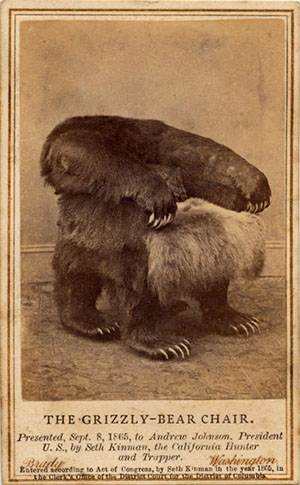
Grizzly bear chair presented by Seth
Kinman to President Andrew Johnson on Sept. 8th, 1865.
Something considered acceptable in Christian societies
into the twentieth century.
|
 |
| |
|
Schelte à Bolswert, St. Augustine’s
apparition in Toledo to drive locusts into the Tagus,
1624
|
 |
| |
| |
|
A cat being sacrificed - taking a bomb
into enemy territory during a siege.
Treatise by artillery master Franz Helm of Cologne, Manuscript
image from the 1500’s.
"Create a small sack like a
fire-arrow. If you would like to get at a town or castle,
seek to obtain a cat from that place. And bind the sack
to the back of the cat, ignite it, let it glow well and
thereafter let the cat go, so it runs to the nearest castle
or town, and out of fear it thinks to hide itself where
it ends up in barn hay or straw it will be ignited."
|
 |
| |
|
Real or photoshopped? There is no way
of knowing from the photograph alone.
|
 |
| |
| |
|
Bibliothèque nationale de France,
Français 174, detail of f. 83r (the Flood).
Augustine, De civitate dei. Paris, beginning of the 15th
century.
|
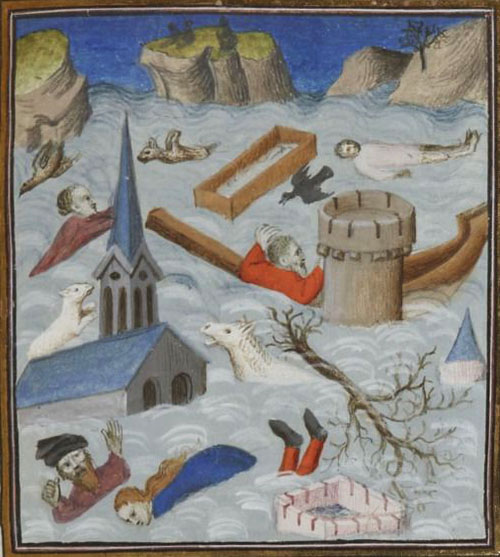 |
| |
|
A widow, her cat and her demon. From
a 1621 witch case in England. The British Library Board).
Women and their cats were killed by Christians on the
grounds that they were witches and their demonic familliars.
|
 |
| |
|
Bear Baiting Misericord
|
 |
| |
|
Bear Baiting Misericord, St Botolph’s
Church, Boston, Lincolnshire, England.
|
.jpg) |
| |
|
Misericord of boar hunting, St Mary's
Church, Beverley, Yorkshire, England.
|
 |
| |
|
Misericord of bear baiting, St Mary's
Church, Beverley, Yorkshire, England.
|
 |
| |
|
Bear Baiting misericord, Manchester Cathedral
|
 |
| |
| |
|
|
|
|
|
|
|
|
|
|
|
|
|
|
|
|
|
|
|
|
|
|
|
|
|
|
|
|
|
|
|
|
|
|
|
|
|
|
Buy the Book from Amazon.com
|
|
|
|
|
|
Buy the Book from Amazon.co.uk
|
|
|
| |
| |
| More Books |
|
|
|



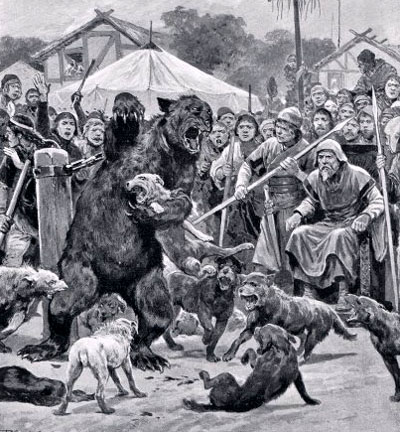


.png)