| |
|
|
He that spareth his rod hateth his
son: but he that loveth him chasteneth him betimes.
|
|
Proverbs 13:24
|
In the past the Christian Church condoned all manner of evil
done to children. It tried and executed them for witchcraft
and for other offences. It saw nothing wrong in beating them
frequently and severely for minor wrongdoing — even for
other people's wrongdoing. It terrified them with stories of
Hell. It allowed them to contract arranged marriages. It failed
to speak out against child labour because it saw nothing at
all wrong in the practice. For many centuries the Church opposed
the education of poor children, except in the few cases where
boys could be drawn into its own service. Girls were denied
education altogether. In punishing children for sins they had
not committed, there seems to have been almost no concept of
fairness or rights. Thus, the Church made much of the concept
of bastardy:
Bastardy, or illegitimacy, was a condition imposed upon a
child by the canon law as a punishment for the sin of the
parents who conceived it by illicit connection. By a legal
fiction, a child born out of wedlock was no one's child,
filius nullius1.
The only entry requirement for Eton College, when it was founded
in 1441 was that the boys should not be illegitimate. The reasoning
was that illegitimacy was a bar to a career in the Church which
is what was planned for the boys. The idea of punishing children
for the acts of their parents could easily be justified on scriptural
grounds:
...I the Lord thy God am a jealous God, visiting the iniquity
of the fathers upon the children unto the third and fourth
generation of them that hate me; Exodus 20:5
Also, as theological authorities pointed out, God had punished
the children of Sodom by death, for the sins of their fathers2,
so the punishment of innocent children was easily justified3.
Good Christians were, as they pointed out, only following God's
own precedent.
For many centuries, illegitimate children were likely to die
in infancy through neglect or mistreatment, largely because
of the stigma suffered by the mother in a Christian society.
When Thomas Coram proposed a foundling hospital early in the
eighteenth century, but his proposal was opposed by the Church
which held that such an institution would encourage promiscuity
and prostitution. On his frequent walks through the City on
winter mornings, Coram was appalled at the sight of dead and
dying babies abandoned on the streets - something that did not
apparently concern the clergy.
He was obliged to seek the help of society ladies who supported
his proposal and ensured support from their husbands. The aristocracy
was represented by dukes and earls; the city of London by magnates
and merchant bankers, the medical community by Dr Richard Mead,
as well as other public figures like writers and artists. In
the teeth of opposition from churchmen, on 17 October 1739 he
obtained a Royal Charter from King George II establishing a
"hospital for the maintenance and education of exposed
and deserted young children." Financial support came from
many quarters, except the Church which still considered the
hospital to be promoting immoral behaviour. Artists became patrons
and governors of the Foundling Hospital and many donated some
of their work to the foundation. The art collection contains
works by William Hogarth, Thomas Gainsborough and Sir Joshua
Reynolds, including a full-length portrait of Thomas Coram himself,
along with musical scores by Handel including a fair copy of
Messiah bequeathed in his will.
|
The photograph shows boys marching out
of the London Foundling Hospital for the last time in
1926. They went to new premises outside London, which
closed in 1955.
|
|
|
|
Although it had opposed the creation
of a Foundling Hospital, the hospital ethos was still
firmly Christian, with compulsory chapel. Foundlings were
obliged to learn and sing the following hymn in public.
It is based on Psalm LI in the Book of Common Prayer.
The children are obliged to recognise their own supposed
guilt, sin and shame.
Wash off my foul offence.
And cleanse me from my Sin
For I confess my crime, and see
How great my Guilt has been .
Against thee, Lord, alone,
And only in thy sight?
Have I tranfgress'd; and tho condemned,
Must own thy Judgement's right.
In Guilt each part was form'd
Of all this sinful frame;
In Guilt I was conceiv'd, and born
The Heir of Sin and Shame.
Blot out my crying Sins,
for me in Anger view;
Create in me a Heart that's clean,
An upright Mind renew.
|
The Church also opposed Henry Fielding's revolutionary novel
The History of Tom Jones, a Foundling, which it also
considered immoral (partly for its exposure of clerical hypocrisy).
Christian stigma was still strong in the 1960s. The following
lyrics are from "Love Child" a 1968 song released
by the Motown label for Diana Ross & the Supremes.
...
I shared the guilt my mama knew
So afraid that others knew I had no name
...
Love child, never meant to be
Love child, (scorned by) society
Love child, always second best
Love child, different from the rest
The stigma of illegitimacy has now virtually disappeared in
secular societies, and the civil law has been amended, but canon
law continues to discriminate against the illegitimate. In the
Church of England they cannot for example become bishops. Other
Churches stick to the traditional line that illegitimacy is
a bar to ordination. In the past the Church punished other children
for the supposed sins of their fathers, and grandchildren for
the sins of their grandfathers4.
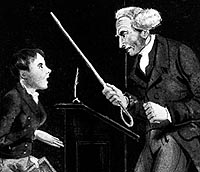  The
Church has always been strong on punishment and has only recently
adopted a cautious stand on corporal punishment for children.
The worst excess could be justified on biblical grounds: The
Church has always been strong on punishment and has only recently
adopted a cautious stand on corporal punishment for children.
The worst excess could be justified on biblical grounds:
The blueness of a wound cleanseth away evil ...
Proverbs 20:30
Foolishness is bound in the heart of a child; but the rod
of correction shall drive it far from him.
Proverbs 22:15
Withhold not correction from the child: for if thou beatest
him with the rod, he shall not die. Thou shalt beat him with
the rod, and shalt deliver his soul from hell. Proverbs 23:13-14
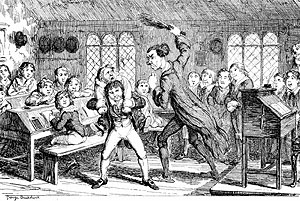 At
the time of writing there is still a steady flow of children
who die at the hands of Christian parents and guardians who
interpret these passages in the traditional way. Several are
reported in national newspapers each year. Under secular pressure
corporal punishment of children in schools was made illegal
in many countries in the late twentieth century. Church schools
— and only church schools — were still mounting legal
challenges to this into the third millennium5.
Their arguments were based on the biblical passages cited above,
which, as the complainants pointed out, not only permit but
also require corporal punishment. At
the time of writing there is still a steady flow of children
who die at the hands of Christian parents and guardians who
interpret these passages in the traditional way. Several are
reported in national newspapers each year. Under secular pressure
corporal punishment of children in schools was made illegal
in many countries in the late twentieth century. Church schools
— and only church schools — were still mounting legal
challenges to this into the third millennium5.
Their arguments were based on the biblical passages cited above,
which, as the complainants pointed out, not only permit but
also require corporal punishment.
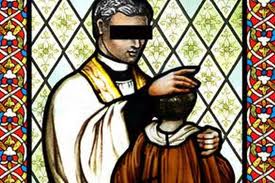 Institutional
abuse — physical, emotional and sexual — also continued
well into the twentieth century. The abuse was widespread, and
hardly a secret within the Churches, yet no one seems to have
thought of informing the secular authorities, or doing anything
to stop the abuse. Children without parents to look after their
welfare were particularly vulnerable. The "orphans"
who were taken from their parents and sent to British colonies
were routinely abused, along with real orphans.
To take just one example abuse continued for over 90 years at
an orphanage run by the Sisters of Mercy until it was exposed
in 1976. Nuns had used a red-hot poker on one child to "exorcise
the Devil" and forced another to put her leg in boiling
water (causing permanent damage) as a punishment for not washing
in hot enough water. Another developed a dangerous infection
after a nun used pliers to pull out her toenails. Injured children
were hidden from visitors in an underground cell without bedding,
ventilation or light. Sexual abuse by priests and other men
was "routine". Professor Bruce Grundy, who investigated
the Order's activities, referred to the "Madness, ruthless
and sadistic madness, on the part of at least some of the nuns,
and the depthless depravity on the part of some of the men who
inhabited the place"6.
These activities were far from unusual, and similar behaviour
has been exposed in numerous Christian orphanages throughout
the world. Institutional
abuse — physical, emotional and sexual — also continued
well into the twentieth century. The abuse was widespread, and
hardly a secret within the Churches, yet no one seems to have
thought of informing the secular authorities, or doing anything
to stop the abuse. Children without parents to look after their
welfare were particularly vulnerable. The "orphans"
who were taken from their parents and sent to British colonies
were routinely abused, along with real orphans.
To take just one example abuse continued for over 90 years at
an orphanage run by the Sisters of Mercy until it was exposed
in 1976. Nuns had used a red-hot poker on one child to "exorcise
the Devil" and forced another to put her leg in boiling
water (causing permanent damage) as a punishment for not washing
in hot enough water. Another developed a dangerous infection
after a nun used pliers to pull out her toenails. Injured children
were hidden from visitors in an underground cell without bedding,
ventilation or light. Sexual abuse by priests and other men
was "routine". Professor Bruce Grundy, who investigated
the Order's activities, referred to the "Madness, ruthless
and sadistic madness, on the part of at least some of the nuns,
and the depthless depravity on the part of some of the men who
inhabited the place"6.
These activities were far from unusual, and similar behaviour
has been exposed in numerous Christian orphanages throughout
the world.
 Commitment
to family carried no weight at all for religious people. Nuns
who had children were widely accused of infanticide for many
centuries. According to the Church, there were other explanations
for such missing children. They had been carried off by angels
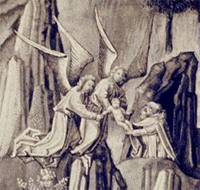
and given to someone else to bring them up. The illustration
on the right is medieval and shows a baby boy, recently delivered
of an abbess (who was suitably penitent about her crime). Angels
have removed the baby and are shown here delivering it to a
hermit living in a remote place - providing an ostensible reason
why the baby would never be seen again. Even imagining some
element of truth in the story, no contemporary Christian considered
it at all odd that a new mother should be separated from her
baby, and handed over to a celibate man who had abandoned all
links to his own family. Commitment
to family carried no weight at all for religious people. Nuns
who had children were widely accused of infanticide for many
centuries. According to the Church, there were other explanations
for such missing children. They had been carried off by angels
and given to someone else to bring them up. The illustration
on the right is medieval and shows a baby boy, recently delivered
of an abbess (who was suitably penitent about her crime). Angels
have removed the baby and are shown here delivering it to a
hermit living in a remote place - providing an ostensible reason
why the baby would never be seen again. Even imagining some
element of truth in the story, no contemporary Christian considered
it at all odd that a new mother should be separated from her
baby, and handed over to a celibate man who had abandoned all
links to his own family.
 The
Medieval Inquisition was permitted to torture witnesses, but
not if they were girls below the age of 12 or boys below the
age of 14. This did not stop its zealous officers, who believed
themselves to be doing God's work, who needed to answer to no
one when they ignored the rules, and who were empowered to forgive
each other for their excesses of Christian zeal. The
Medieval Inquisition was permitted to torture witnesses, but
not if they were girls below the age of 12 or boys below the
age of 14. This did not stop its zealous officers, who believed
themselves to be doing God's work, who needed to answer to no
one when they ignored the rules, and who were empowered to forgive
each other for their excesses of Christian zeal.
In England children over the age of seven were liable to the
death penalty, and few if any clergymen seem to have found this
at all questionable, at least until the rise of secularism.
A 13-year-old was hanged at Maidstone as late as 1831 and a
14-year-old in 18337.
For years to come, younger children would be sentenced to death,
but were invariably reprieved, until the death penalty for those
aged under 16 was abolished in 1908.
The Krampus
Christianity offered both carrot and stick for adults - the
delights of heaven in the company of God against the horrors
of hell in the company of satan. For children the promise and
the threat were both made more tangible and immediate. The carrot
was that at Christmas, Saint Nicholas, Santa Clause, would bring
presents and happpiness. The stick was the Krampus, a demonic
character who would punish and terrorise children.
|
Krampus aka Knecht Ruprecht, Certa, Perchten,
Black Peter, Schmutzli, Pelznickel, Klaubauf
Here is is stuffing a naughty boy in his basket before
carrying him off
|
|
|
In German-speaking countries Krampus is a horned figure. According
to traditional narratives he punished children who had misbehaved.
He appears in many variations, but most share some common physical
characteristics. He is hairy, usually brown or black, and has
the cloven hooves and horns of a goat. His long pointed tongue
lolls out. Krampus carries chains which he thrashes around.
He carries ruten, bundles of birch branches, or whips to swat
children with. Sometimes Krampus appears with a sack or a washtub
strapped to his back, to cart off evil children for drowning,
eating, or to take to Hell. Older versions make specific mention
of naughty children being put in the bag. On Krampus Night or
Krampusnacht, the wicked hairy devil appears on the streets,
just as Santa Clause would appear in person the following day
on 6th December.
|
Greetings from the Krampus
Names for Santa's sinister dark companion include Krampus
in Austria, Bavaria, Croatia, Slovenia, Friuli, Hungary
(spelled Krampusz); Knecht Ruprecht in Germany;
Klaubauf in Bavaria and Austria; Bartel in
Styria; Pelzebock; Befana; Pelznickel; Belzeniggl;
Belsnickel in the Palatinate (and also Pennsylvania,
due to Pennsylvania Dutch influence); Schmutzli in
Switzerland; Rumpelklas; Bellzebub; Hans Muff; Drapp;
Buzebergt in Augsburg and Little Babushka in
Russia. The corresponding figure in the Netherlands and
Flanders is Zwarte Piet (Black Pete), and in Swiss
folklore Schmutzli, (schmutz meaning dirt). In
France, St. Nicholas' companion is called Rubbels
except in German-speaking Lorraine and Hanstrapp (in Alsace)
and in Wallonia, Northern and Eastern France where he
is Le Père Fouettard.
|
|
|
Santa Clause usually appears in the Eastern Rite vestments
of a bishop. He concerns himself only with the good children,
while Krampus is responsible for the bad. Nicholas dispenses
gifts, while Krampus supplies coal and the ruten bundles, and
carries bad children off to hell. Sometimes accompanying St
Nicholas; sometimes on his own, Krampus visits homes. It is
customary to offer a Krampus schnapps. Europeans have been exchanging
greeting cards featuring Krampus since the 1800s. Sometimes
introduced with Gruß vom Krampus (Greetings from the Krampus.
Krampus is often featured looming menacingly over children.
He is also shown as having one human foot and one cloven hoof.
Over time, as secular ideas of morality have replaced Christian
ones, the representation of Krampus in the cards has changed;
more recent versions becoming ever less frightening and now
resembling a cute, Cupid-like creature. Many modern children
have never even heard of Krampus.
Christian Child Marriage
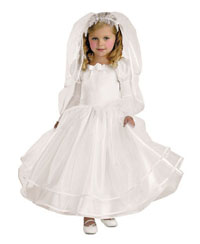 To
listen to the Church's current views on the subject of sexual
abuse of children, one could easily form the opinion that the
Church has always been opposed to sexual activity below the
age of 16, or even older. In fact when the Church had control
of these matters the age of consent to sexual relations was
7 (though marriage contracts were voidable up to the age of
12 for a girl and 14 for a boy). To
listen to the Church's current views on the subject of sexual
abuse of children, one could easily form the opinion that the
Church has always been opposed to sexual activity below the
age of 16, or even older. In fact when the Church had control
of these matters the age of consent to sexual relations was
7 (though marriage contracts were voidable up to the age of
12 for a girl and 14 for a boy).
A marriage between a grown man and a little girl was as good
as any other in the eyes of the Church8.
For dynastic reasons toddlers could be, and were, married to
each other in church, though the civil courts would grant a
divorce if one of the parties later objected.9.
Here is the basic cannon law:
Betrothals cannot be contracted before the seventh year.
For they can be contracted only with consent, which requires
each party to understand what they agree to. (Decretum
gratiani, Case 30, q II)10.
But the Church would sometimes uphold marriages below the age
of seven, for example in one case a man had married a girl under
the age of seven, and had then left her to marry her cousin.
Pope Eugene provided the following decision:
"A young man, who took a girl not yet seven years old
in marriage, appears not to have consummated the marriage
he entered, due to age or some other human disability.
In doubtful matters, we are to follow the safer course. So,
because she was called and possibly is his wife, we command
you that he be divorced on the grounds of ecclesiastical propriety
from the girl's cousin, whom he afterwards took".
(Decretals of Pope Gregory IX , Book Four, Title I Betrothals
and Marriages, C. 3.)
Pope Hormisdas writing to Bishop Eusebius indicated that a
father cannot insist on who an adult son should marry, he can
decide who an infant son should marry:
"But if the son is not yet an adult, and his will cannot
be discerned, his father may give him to whomever he wishes
in marriage, and when the son reaches maturity, he must fulfill
this entirely".
(cited in the Decretals of Gregory IX , Book Four, Title II
C1..)
There was also a special exemption for powerful nobles, who
could marry off their children for dynastic reasons at any age
- even new born babies. The euphemism for this was a marriage
"for the sake of peace". Here is the relevant law:
Two prepubescents, or a prepubescent and one older, are not
to be married, except for the sake of peace. (Decretals of
Gregory IX , Book Four, title II C. 2.)
Other interesting cases include one where a man married a young
girl, but then took her mother as a wife (the question being
which to recognise as the legal wife) and another one where
a man has had sexual intercourse with a wife aged under 12 (the
question being whether the sexual intercourse has sealed the
marriage bond)11
In general the rule was that children could be betrothed at
seven. When they reached puberty (ie the age of 12 for girls
and fourteen for boys) they were allowed to accept or reject
the arrangement, as long as they had not already had sexual
intercourse.
Prepubescents contracting betrothal may not be separated
before puberty, but after puberty they may if they reject
the betrothal, unless they have had carnal intercourse.
(Decretals of Gregory IX , Book Four, Title II C. 8)
Here is a specific cease:
From Your Fraternity's letter we gather that a certain girl
of twelve was sworn and betrothed to a certain boy of nine
or ten. With the passing of time, by the will of her parents
rather than her own, as she asserts, she was taken to the
home of the boy's father, and there, protesting and resisting,
as you say you have heard from her lips, and forced by the
arguments and the threats of the parents, she stayed for a
year or more. Then she left and returned home. Admonished
by her mother, and later by you, as you assert, she completely
refused to return to him, asserting that she did not, and
still does not, want him as a husband. She now asks permission
to marry another. The boy, as you letter says, had not yet
reached the age of fourteen, nor did he ever have access carnally
to the girl. Therefore, we reply to Your Discretion as follows:
If the girl is warned zealously by you to wait until the boy
completes his fourteenth year of age, and will not wait in
accord with your warning, you may, by our authority, give
her the liberty and permission to take another man as husband,
in accord with what has been stipulated.
(Decretals of Gregory IX , Book Four, Title II C. 11)
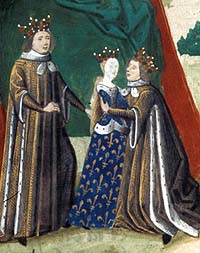 Many
Christian sources now claim that Christian child marriage was
always very rare and restricted to great noble houses. We know
that this is not true through several sources. Although child
marriages were not always recorded, divorces were recorded by
the courts - and since we know of countless thousands of child
divorces, we can safely assume that there were more marriages
than divorces by a significant factor. We also have have written
evidence that contemporaries took child marriage for granted.
In Shakespeare's Romeo and Juliet, Juliet was just 13. Her mother,
who was 26 refers to her almost an old maid. Many
Christian sources now claim that Christian child marriage was
always very rare and restricted to great noble houses. We know
that this is not true through several sources. Although child
marriages were not always recorded, divorces were recorded by
the courts - and since we know of countless thousands of child
divorces, we can safely assume that there were more marriages
than divorces by a significant factor. We also have have written
evidence that contemporaries took child marriage for granted.
In Shakespeare's Romeo and Juliet, Juliet was just 13. Her mother,
who was 26 refers to her almost an old maid.
The children of Henry II had been married in babyhood, and
the Council of Westminster (1175) conceded that these could
be valid marriages "pro bono pacis" (for the sake
of peace), A few examples of Christian child marriages - taking
just supposed saints the greatest nobles whose dates can be
easily confirmed - are:
- Saint Theophanes Confessor was married at the age of twelve
around 770
- Eleanor of Aquitaine was fifteen when she married Louis
VII of France in 1137.
- Theodora Comnena was thirteen when she was married King
Baldwin III of Jerusalem in 1158.
- Agnes of France was twelve when (already widowed) she was
married to Andronicus Comnenus, Byzantine Emperor in 1182.
- Sancha of Aragon, aged 8 was betrothed to Raymond VII of
Toulouse in March 1211.
- the Treaty of Meaux-Paris 1229, included a requirement for
nine year old Joan of Toulouse to marry nine year old Alphonse
of Poitiers (they were betrothed in the same year, and their
marriage ceremony took place in 1239)
- Eleanor of Castile was twelve when she married the fifteen-year-old
future Edward I of England on 1 November 1254
- Saint Elizabeth of Portugal was twelve when she married
to King Denis of Portugal in 1281.
- Margaret Countess of Tyro, was married at the age of twelve
to eight-year-old John Henry of Luxembourg, a younger son
of King John of Bohemia, in 1300
- Saint Clara Gambacorta was married at the age of twelve
in 1374 and widowed at the age of fifteen.
- Saint Rita of Cascia was twelve when she was married to
Paolo Mancini in 1393 against her will, and delivered her
first child as the same age.
- Isabel of France was eight when she married Richard II of
England in 1396.
- Blanche of England was eight years old when her marriage
contract was signed on 7 March 1401. The formal marriage ceremony
between Blanche and Louis III, Elector Palatine, took place
just over a year later, shortly after her tenth birthday.
- Philippa of England was married at the age of twelve to
Eric of Pomerania on 26 October 1406
- Bianca Maria Sforza was not quite two years old when she
married her first cousin Philibert I, Duke of Savoy in January
1474. She was a widow at the age of ten.
- Bianca of Savoy, Duchess of Milan, was thirteen when she
was married to Galeazzo II Visconti in 1350) (and fourteen
when she gave birth to a son)
- Lady Margaret Beaufort Margaret was married to John de la
Pole when she was no more than three years old. (A Papal dispensation
was granted on 18 August 1450 because the spouses were too
closely related.). Three years later, the marriage was dissolved.
She was twelve when she married 24-year old Edmund Tudor on
1 November 1455. Edmund died soon afterwards leaving her a
seven-month pregnant thirteen-year-old widow.
- Caterina Sforza was betrothed aged nine to Girolamo Riariomarried
in 1473. The marriage was consummated four years later.
- On 26 February 1491, a matrimonial arrangement was drawn
up between eleven year old Lucrezia Borgia and the Lord of
Val D'Ayora. It was annulled less than two months later in
favour of a new contract engaging Lucrezia to Don Gaspare
Aversa, count of Procida. Pope Alexander VI called off Lucrezia's
engagement and arranged for her to marry Giovanni Sforza,
a member of the house of Sforza, who married thirteen year
old Lucrezia on 12 June 1493 in Rome.
- Claude of France was promised to the future Holy Roman Emperor
Charles V at the age of four, but the arrangement fell through.
She was later betrothed to her cousin Francis, Duke of Angoulême,
and married him aged fourteen, in 1514.
- Catherine de Vivonne, marquise de Rambouillet was married
at the age of twelve to Charles d'Angennes in 1600
|
King Richard II of England Receiving
his Bride Isabella fromher Father King Charles VI of France.
Jean Froissart, Chronicles, c 1470, BL MS Royal 14D VI
f268v (detail)
|
|
|
As Erasmus pointed out
It is no uncommon case, especially in France, for a girl
of scarce ten years to be married and a mother [the] next
year. . . . It seems portentous, and yet we sometimes see
it, especially in Britain and Italy, that a tender child is
married to a septuagenarian ... Yet Church Laws do not rescind
such nuptials, although they are satirised by public jests
and epigrams"12
In England the marriage age was raised to 16 in 192913,
though many other states that have retained Christian custom
and practice have opted for the ages of 12 and 14. The rock
and roll star, Jerry Lee Lewis caused outrage in Britain, in
May 1958 when it emerged that his third wife, Myra Gale Brown
was only 13 years old at the time (and his first cousin once
removed). Particularly Christian states in the US still had
12 as the age for marriage at this time. (The state of Delaware
retained the traditional lower limit of 7 as the age of consent
into the twentieth century).
Children as Chattels
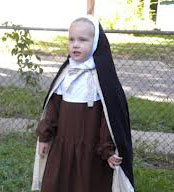 Children
were mere chattels of their Christian parents and so could be
used as free labour, or sold or even given away. If a couple
had ten or twenty children, they could even be offered to the
Church as tithes, and the Church would accept them. Children
were mere chattels of their Christian parents and so could be
used as free labour, or sold or even given away. If a couple
had ten or twenty children, they could even be offered to the
Church as tithes, and the Church would accept them.
At the age of eight, boys were given away to monasteries and
girls to convents. The hagiographers of the migranous Hildegard
of Bingen tells us that although she was a weak and sickly child
she was given away as tithe offering at the age of eight, to
become a nun at the age of 14.14.
This was by no means unusual - and of course the children generally
had no say in the matter.
|
Don Perosi with the Choir of the Sistine
Chapel (c. 1905).
Seven of these boys had been castrated, to better serve
the pope
|
|
|
 In
practice children were committed to monasteries and nunneries
even as infants, and could be obliged to follow a lifestyle
for which they had no vocation at all. One well-known example
is the "The Nun of Watton", born in the 1140s. (She
is referred to as The Nun of Watton because no one thought to
record her real name.) While she was still a toddler, Henry
Murdac, the Archbishop of York, took her to a Gilbertine Priory
in Watton, Yorkshire, which was apparently not as lax as many
other priories. She proved to be wholly unsuited to the life
of a nun. As a teenager she made the acquaintance of a lay brother
in the same priory and became pregnant by him. On discovering
this, the sisters stripped, whipped and imprisoned her. According
to Saint Ailred, the monk who subsequently investigated the
case, some of the younger nuns wanted her burnt, roasted, branded
or skinned alive, but the older sisters devised a more subtle
punishment. The pregnant girl was thrown into solitary confinement,
chained hand and foot, and fed on bread and water. The monk
was lured back to the priory and his lover was then forced to
castrated him, his severed genitals then being forced into his
mouth. The unborn child was aborted - supposedly miraculously
when the Archbishop of York, Henry Murdac, appeared with two
heavenly women who cleansed the girl's body of both her sin
and of her pregnancy15.
So in all, two children's lives were ruined, possibly three
as we do not know the age of the monk. However old he was, it
is likely that he would have died from his injuries. In
practice children were committed to monasteries and nunneries
even as infants, and could be obliged to follow a lifestyle
for which they had no vocation at all. One well-known example
is the "The Nun of Watton", born in the 1140s. (She
is referred to as The Nun of Watton because no one thought to
record her real name.) While she was still a toddler, Henry
Murdac, the Archbishop of York, took her to a Gilbertine Priory
in Watton, Yorkshire, which was apparently not as lax as many
other priories. She proved to be wholly unsuited to the life
of a nun. As a teenager she made the acquaintance of a lay brother
in the same priory and became pregnant by him. On discovering
this, the sisters stripped, whipped and imprisoned her. According
to Saint Ailred, the monk who subsequently investigated the
case, some of the younger nuns wanted her burnt, roasted, branded
or skinned alive, but the older sisters devised a more subtle
punishment. The pregnant girl was thrown into solitary confinement,
chained hand and foot, and fed on bread and water. The monk
was lured back to the priory and his lover was then forced to
castrated him, his severed genitals then being forced into his
mouth. The unborn child was aborted - supposedly miraculously
when the Archbishop of York, Henry Murdac, appeared with two
heavenly women who cleansed the girl's body of both her sin
and of her pregnancy15.
So in all, two children's lives were ruined, possibly three
as we do not know the age of the monk. However old he was, it
is likely that he would have died from his injuries.
|
Children, like adults, might be committed
to monasteries if their very existence was politically
inconvenient to the Church. It was in practice a form
of perpetual imprisonment. The painting below shows Childeric
III (c. 717 – c. 754), King of Francia from 743 until
he was deposed by Pope Zachary in March 751 and forceably
tonsured as a monk.He was the last Frankish king of the
Merovingian dynasty, replaced by Pepin the Short, the
father of emperor Charlemagne.
Evariste Vital Luminais (1822-1896),
Le dernier des Mérovingiens,
Musée des Beaux-Arts de Carcassonne.
|
 |
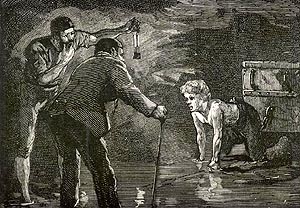 The
Christian record on children's rights is no better than its
record on other matters. The Churches opposed the education
of poor boys and all girls. European Churches were responsible
for the trial, torture, conviction, imprisonment and execution
of children as young as five or six, often contravening the
civil law. In the nineteenth century the Churches opposed the
abolition of child labour, and continued to be party to a wide
range of abuse, mental, physical and sexual into the twentt-first
century. The
Christian record on children's rights is no better than its
record on other matters. The Churches opposed the education
of poor boys and all girls. European Churches were responsible
for the trial, torture, conviction, imprisonment and execution
of children as young as five or six, often contravening the
civil law. In the nineteenth century the Churches opposed the
abolition of child labour, and continued to be party to a wide
range of abuse, mental, physical and sexual into the twentt-first
century.
|
Mid 19th Century:
young children working over 80 hours per week in a dark
tunnel, about half their height
|
 |
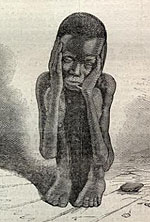 In
short, the Church has never supported the rights of children.
Mainstream Churches made no more effort to end child labour
than they did to end slavery. In England, Anglicans consistently
opposed unbelievers like Jeremy Bentham, J. S. Mill and the
philanthropist Robert Owen (1771-1858), who championed the improvement
of social conditions for working children. Children's rights
are an invention of secular philosophers. In
short, the Church has never supported the rights of children.
Mainstream Churches made no more effort to end child labour
than they did to end slavery. In England, Anglicans consistently
opposed unbelievers like Jeremy Bentham, J. S. Mill and the
philanthropist Robert Owen (1771-1858), who championed the improvement
of social conditions for working children. Children's rights
are an invention of secular philosophers.
 Children's
champions included almost anyone except the Churches. For example,
the first law in Germany to prohibit the employment of children
(under the age of nine) in factories was passed in 1839 at the
behest of the military authorities, who were concerned at the
poor physical condition of their recruits. Nowhere did any mainstream
Churches lead the move to protect children. Children's
champions included almost anyone except the Churches. For example,
the first law in Germany to prohibit the employment of children
(under the age of nine) in factories was passed in 1839 at the
behest of the military authorities, who were concerned at the
poor physical condition of their recruits. Nowhere did any mainstream
Churches lead the move to protect children.
|
Cartoon by Frederick T. Richards in
Philadelphia North American, 1913:
"Emaciated child laborers pulling chariot of rich,
monstorous 'child labor exploiter.'"
A US cartoon, lampooning the continued exploitation of
child labour well into the twentieth century.
|
|
|
|
There are still Churches teaching the traditional Christian
line that children should be seen but not heard, and affirming
the Christian injunction "spare the rod and spoil
the child", based on Proverbs, 13:24.
|
Factory workers - The reality of child
labour in the USA
In 1938 child labor was regulated by the Fair Labor
Standards Act
For the first time, minimum ages of employment and hours
of work for children were regulated by federal law -
for two millennia Church Law has never considered child
exploitation either a sin or a crime.
|
|
|
|
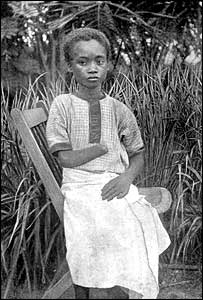
This photograph was taken c 1905
in the Congo Free State, established to spread Christian
ideas
One of the countless child victims of the Rubber
Terror, where amputation was a common punishment
for children who failed to meet rubber production
quotas
|
|
|
|
| |
For more on child abuse in the Congo Free State, and the role
of the Christian Churches, see Christian
atrocities.
Kidnapping and indoctrinating Children.
Churches have been involved in kidnapping children for many
centuries. The children concerned have been the children of
non-Christian parents, or "mixed-race" children, or
the children of insufficiently Christian parents who failed
to meet Christian moral standards, for example unmarried mothers,
and parents with left-wing views. Kidnapping was practiced on
pagan children in the early Church, on Romanies and Jews throughout
Europe, on aboriginal peoples in North America, Central America,
South America, Africa, Australia and New Zealand. It was common
in totalitarian Catholic countries such as Spain and Nazi Germany
and in other particularly Catholic countries such as Ireland
and Belgium. Often the purpose was explicitly to civilize and
Christianize the Children.
In some Spanish speaking totalitarian countries like Spain
and Argentina, nuns would steal new-born babies. They told the
left-wing parents that their babies had died immediately after
birth, and sold the babies to politically acceptable childless
Catholic couples.
Church kidnapping continued until the second half of the twentieth
century in Britain, the USA, Canada and Australia. Children
were taken from their families, by force if necessary, sometimes
in handcuffs. They were generally split up from any siblings,
given new identities by Church authorities and provided with
forged supporting documentation, and told that their parents
were dead. They were usually indoctrinated in Christian dogma
and trained for menial tasks, in some cases amounting to slave
labour. In Africa, most notably in the Congo Free State, boy
"orphans" were trained as soldiers to terrorise their
fellow Africans.
Many boys and girls were abused in Church-run orphanages -
physically, sexually and mentally, by priests and nuns. Churches
still refuse to help survivors to find their real families.
In recent years investigations in many English speaking countries
have revealed the scale of the abuse and the role of Church
and State in it. Several governments, notably Ireland, Canada
and Australia have made public apologies in parliament for the
part played by the state. such acts of contrition have not been
matched by the Churches, whose responsibility was far greater.
|
Children's Handcuffs
Haskell Indian Nations University's Cultural Center and
Museum in Lawrence, Kansas, USA
According to the donor, these tiny handcuffs were used
to force reluctant Native American Children from their
families.
|
|
|
For more detail on the Christian practice of kidnapping, indoctrinating
and abusing children, click on this link to Christian
Kidnapping of Children
 As
in every area of reform, the Churches have followed secular
opinion and few in the west are now prepared to defend the opinions
that they held with absolute certainty in the nineteenth century.
As so often there are exceptions. It is still possible to find
pockets of traditional belief from Church schools insisting
on their rights to beat children to pastors advocating the killing,
torture or abandonment of possessed and bewitched children.
In 2005 it was estimated that 70% of the street children in
Kinshassa had been abandoned by their parents because of accusations
of witchcraft16.
With Christianity expanding fast across Africa and Kinshasa
as a bellwether, there may now be more children being tortured
and starved by Christian leaders and by Christian parents than
ever before. As
in every area of reform, the Churches have followed secular
opinion and few in the west are now prepared to defend the opinions
that they held with absolute certainty in the nineteenth century.
As so often there are exceptions. It is still possible to find
pockets of traditional belief from Church schools insisting
on their rights to beat children to pastors advocating the killing,
torture or abandonment of possessed and bewitched children.
In 2005 it was estimated that 70% of the street children in
Kinshassa had been abandoned by their parents because of accusations
of witchcraft16.
With Christianity expanding fast across Africa and Kinshasa
as a bellwether, there may now be more children being tortured
and starved by Christian leaders and by Christian parents than
ever before.
Photographs
|
This pair of mahogany finger stocks was
used as a punishment in a Victorian school
|
|

|
|
|
|
.Child in Cuenca, Spain, photographed
by Christer Strömholm in 1961
|
|
|
|
|
|
Charles VII with his future mother-in-law,
Yolande d'Aragon, Duchess of Anjou
He married Marie of Anjou in 1422
|
|
|
|
|
|
The reality of hell terrified countless
generations of children.
There are still adults alive who bear the mental scars
|
|

|
|
|
|
The baby of a slave is auctioned, despite
the pleas of its mother
Illustration by Henry Bibb, a former slave
|
|

|
|
|
|
|
|
Christian education has been described
as a form of child abuse.
Most religious indoctrination is more sibtle than this
example.
|
|
|
|
|
|
Child 'Powder Monkey' on the USS New
Hampshire (1864)
|
|
|
|
|
|
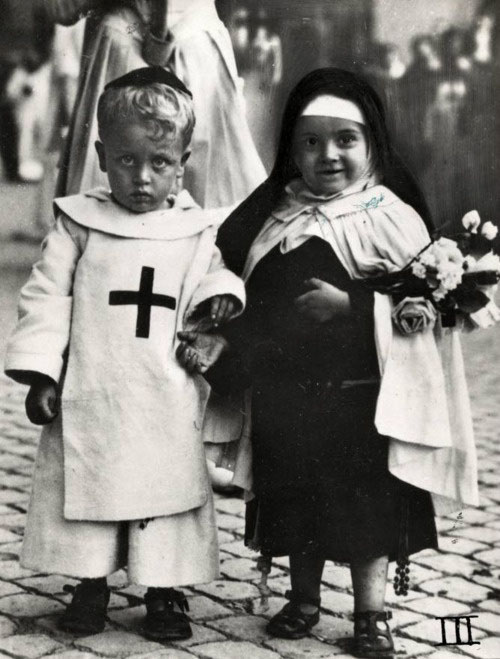
Infant nuns. Date unknown.
|
|
|
|
|
|
Procession of Young Girls on Confirmation
Day, L'hopital de Beaune, 1906
by Henri-Jules-Jean Geoffroy. French (1853 - 1924)
|
|
|
|
|
|
Would be Monk and Nun, Rome, 1929
|
|
|
|
|
|
This Christian illustration is not Jesus
still approving of a thousand years of Christian child
marriage,
but a Confirmation Prayer Card
|
|
|
| |
|
Handcuffs used by the U.S. government
to restrain captured Native American children
|
|

|
|
|
Child Labour - Christian Era USA
Part of a photo series, taken by photographer Lewis Hine on
behalf of the National Child Labor Committee in the USA, archived
by the Library of Congress, showing what conditions were like
for child laborers before child labor was largely eliminated
in 1938. The Christian view after 1900 years of continuing divine
Christian revelation permitted children, as young as 4, to work
in factories, mines, plantations and textile mills. Dangers
included lung damage as well as physical mutilation, since God
had not revealed any need for elementary work-place protection.
Working children were expected to attend church every Sunday,
their one day off work each week.
|
Boys working at Bibb
Mill No. 1, Macon, Georgia, USA. 1909.
These boys were so small they had to climb up on the spinning
frame to mend the broken threads and put back the empty
bobbins.
|
|
|
| |
|
3-year-old daughter
of an overseer at Ivey Mill, Hickory, North Carolina,
USA. Early twentieth century.
|
|
|
| |
|
Amos Neal, 6 years
old, and Horace Neal, 4 years old, in Tobacco Fields,
Warren County, Albaton, Kentucky, USA. Early twentieth
century..
Their father, John Neal, said (and the owner of the land
confirmed it) that both these boys work day after day
from “sun-up to sun-down” worming and suckering.
|
|
|
| |
|
Vance, a Trapper Boy,
15 years old, West Virginia, USA. Early twentieth century..
He worked for $0.75 a day for 10 hours work
Vance had been a trapper for several years in the coal
mine. All a trapper does is to open and shut a mine door.
Most of the time he sits here in the dark, waiting for
the next car to come.
|
|
|
| |
|
Willie Bryden, 13,
another trapper, holding the door open in a mine, Shaft
#6 Pennsylvania Coal Co, Pittston, Pennsylvania,, USA.
Early twentieth century..
Willie's job was to open the door for a trip to come through.
Normally he sat alone in the dark.
(The scene would have been specially lit for the photograph).
It was so damp that Willie needed constant medical attention
for a cough. A short distance from here, gas was pouring
into the mine so rapidly that it made a great torch when
the foreman lit it. At the time of the photograph, Willie
had been working here for four months. "January 16th,
I found Willie at home sick, His mother admitted that
he is only 13 yrs old; will be 14 next July. Said that
4 mos. ago the mine boss told the father to take Willie
to work..."
|
|
|
| |
|
Child Cigarmakers
employed at Englahardt & Co., Tampa, Florida, USA.
Early twentieth century..
Both boys and girls were employed.
Apparently all of them smoked cigars, which they were
allowed to do.
|
|
|
| |
|
11-year-old Nannie
Coleson, looper at Crescent Hosiery Mill, Scotland Neck,
North Carolina, USA
Early twentieth century.
Nannie said she was 11 years old, and had been working
in the Crescent Hosiery Mill for some months.
She made about $3 a week.
She told an investigator that, “There are other little
girls in the mill too"
|
|
|
| |
|
Breaker boys in #9
breaker, Pittston, Pennsylvania, USA. Early twentieth
century.
A breaker boy was a coal-mining workerwhose job was to
separate impurities from coal by hand in a coal breaker.
|
|
|
| |
|
Breaker boys sort
coal at an anthracite coal breaker near South Pittston,
Pennsylvania, USA, in 1911.
The dust penetrated the lungs - at times it was dense
enough to obscure the view.
|
|
|
|
|
|
Callie Campbell,
11 years old, Potawotamie County, Oklahoma, USA. Early
twentieth century.
Callie picked 75 to 125 pounds of cotton a day, and toted
50 pounds of it when sack was full..
|
|
|
|
|
The Pass Christian
Company (Dunbar, Lopez, Dukate Co) .Mississippi, USA
All these children were shucking oysters and tending
babies from before daybreak and until about 5 P.M. Photo
was taken at noon in absence of Supt., who permits no
photos on account of Child Labor agitation. .
Digital ID: (color digital file from b&w original
print) nclc 00861 https://hdl.loc.gov/loc.pnp/nclc.00861
Reproduction Number: LC-DIG-nclc-00861 (color digital
file from b&w original print)
Repository: Library of Congress Prints and Photographs
Division Washington, D.C. 20540 USA https://hdl.loc.gov/loc.pnp/pp.print
|
|
|
|
|
National Child
Labor Committee No. 954. One-legged boy. Neil Gallagher,
Wilkes Barre, Pa. Born January 14, 1891. Went to work
at about 9 years. Worked about two years in breaker.
Went inside at about 11 years. "Tripper,"
tending door. 83 cents [a] day. Injured May 2, 1904.
Leg crushed between cars. Amputated at Mercy Hospital,
Wilkes Barre. "Baltimore Tunnell" - "Black
Diamond" D. & ...
1909 November.
1 negative | Hine, Lewis Wickes, 1874-1940
LOT 7483, v. 1, no. 0954 [P&P] LC-H5- 954 | LC-DIG-nclc-04573
|
|
|
|
|
Harry McShane -
134 Broadway, Cincinnati, Ohio. - 16 yrs. of age on
June 29, 1908. Had his left arm pulled off near shoulder,
and right leg broken through kneecap, by being caught
on belt of a machine in Spring factory in May 1908.
Had been working in factory more than 2 yrs. Was on
his feet for first time after the accident, the day
this photo was taken. No attention was paid by employers
to the boy either at hospital or home according to statement
of boy's father. No compensation.
|
|
|
|
|
Accident to young
cotton mill worker. Giles Edmund Newsom (Photo October
23rd, 1912) while working in Sanders Spinning Mill,
Bessemer City, North Carolina.. August 21st, 1912, a
piece of the machine fell on to his foot, smashing his
toe. This caused him to fall on to a spinning machine
and his hand went into the unprotected gearing, crushing
and tearing off two fingers. (Hine no. 3073)
|
|
|
|
|
Breaker of the
Chauncy Colliery, Pennsylvania, USA, where a 15 year
old breaker-boy was smothered to death and another badly
burned on 7 Jan. 1911. The Coroner said that the McKee
boy was but a few days past his 15th birthday when he
was killed, and that the evidence seemed to show that
he was at work in another breaker before his 14th birthday.
|
|
|
|
|
|
Photographer Lewis Hine shot images of
young boys smoking cigarettes
emphasizing one of the harmful effects of child labor.
ca. 1880
|
|
|
|
|
|
|
Krampus
More social issues:
|
|
|
|
|
|
|
|
|
|
|
|
|
|
|
|
|
|
|
|
|
|
|
|
|
|
|
|
|
|
|
|
|
|
|
|
|
|
Buy the Book from Amazon.com
|
|
|
|
|
|
Buy the Book from Amazon.co.uk
|
|
|
| |
| |
| More Books |
|
|
|